
Sku: WP7100

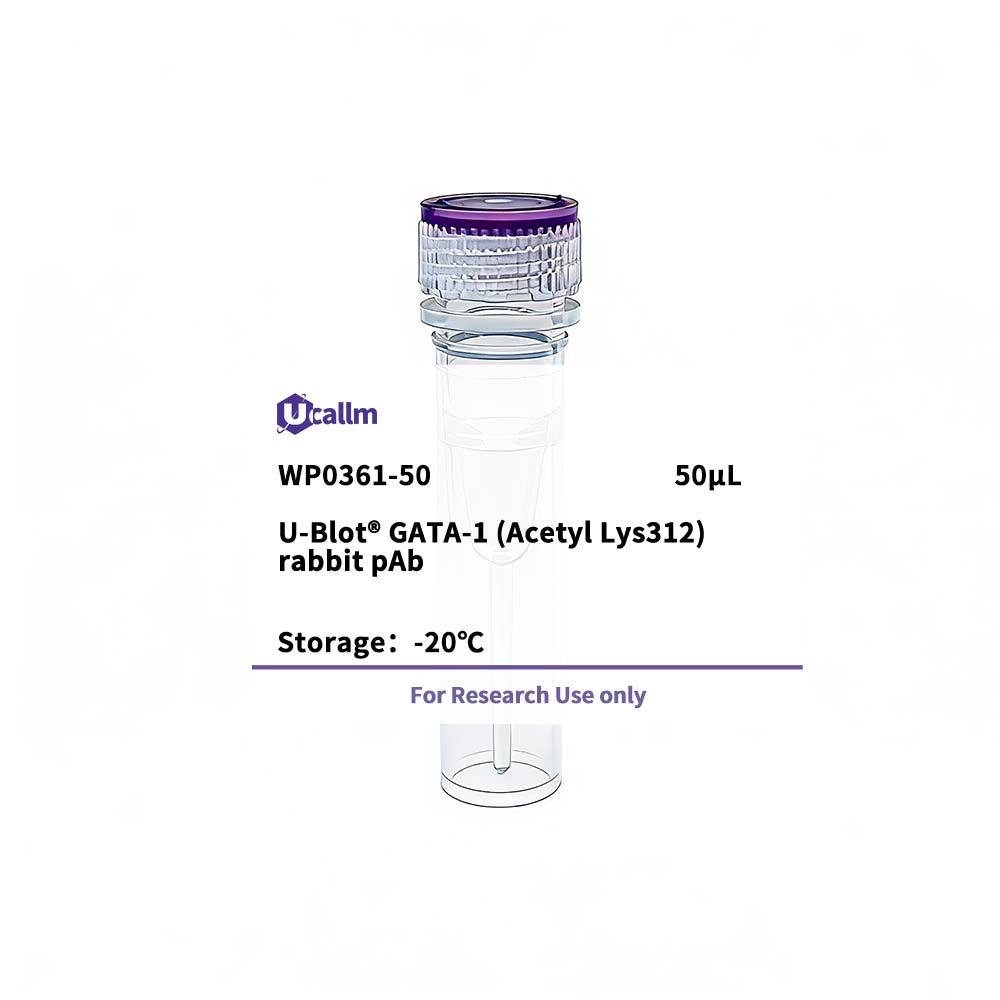
Catalog No.: WP0361
Specification: 50μL/100μL
Stock: In stock
U-Blot® GATA-1 (Acetyl Lys312) rabbit pAb Learn more
Background:disease:Defects in GATA1 are the cause of X-linked dyserythropoietic anemia and thrombocytopenia (XDAT) [MIM:300367]. XDAT is a disorder characterized by erythrocytes with abnormal size and shape, and paucity of platelets in peripheral blood. The bone marrow contains abundant and abnormally small megakaryocytes.,disease:Defects in GATA1 are the cause of X-linked thrombocytopenia with beta-thalassemia (XLTT) [MIM:314050]; also called thrombocytopenia, platelet dysfunction, hemolysis, and imbalanced globin synthesis. The disease consists of an unusual form of thrombocytopenia with beta-thalassemia. Patients have splenomegaly and petechiae, moderate thrombocytopenia, prolonged bleeding time due to platelet dysfunction, reticulocytosis and unbalanced (hemo)globin chain synthesis resembling that of beta-thalassemia minor.,domain:The two fingers are functionally distinct and cooperate to achieve specific, stable DNA binding. The first finger is necessary only for full specificity and stability of binding, whereas the second one is required for binding.,function:Transcriptional activator which probably serves as a general switch factor for erythroid development. It binds to DNA sites with the consensus sequence [AT]GATA[AG] within regulatory regions of globin genes and of other genes expressed in erythroid cells.,PTM:Highly phosphorylated on serine residues. Phosphorylation on Ser-310 is enhanced on erythroid differentiation. Phosphorylation on Ser-142 promotes sumoylation on Lys-137.,PTM:Sumoylation on Lys-137 is enhanced by phosphorylation on Ser-142 and by interaction with PIAS4. Sumoylation by SUMO1 has no effect on transcriptional activity.,similarity:Contains 2 GATA-type zinc fingers.,subunit:Interacts (via the N-terminal zinc finger) with ZFPM1. Interacts with GFI1B. Interacts with PIAS4; the interaction enhances sumoylation and represses the transactivational activity in a sumoylation-independent manner.,tissue specificity:Erythrocytes.,
ucallm
Datasheet, COA, SDS, and protocol files can be requested from technical support.
Emailinfo@ucallmlabs.com
Phone+(1)-866-986-9598
WeChat / IMUcallm-Tech
HoursMonday-Friday 09:00-18:00 CST
Sku: WP7100

Sku: WP6801
Sku: WP9999

Sku: WP9998
Sku: WP9997