
Neuroscience Research Solutions
From Molecular Identity To Spatially Resolved Brain Biology
From Spatial Multi-Omics To Neural Models, Molecular Mechanisms And Translational Discovery
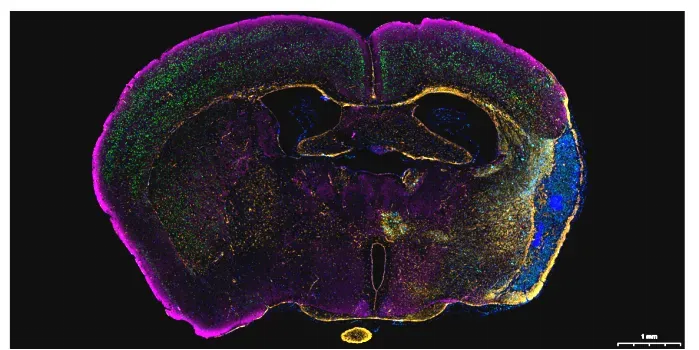
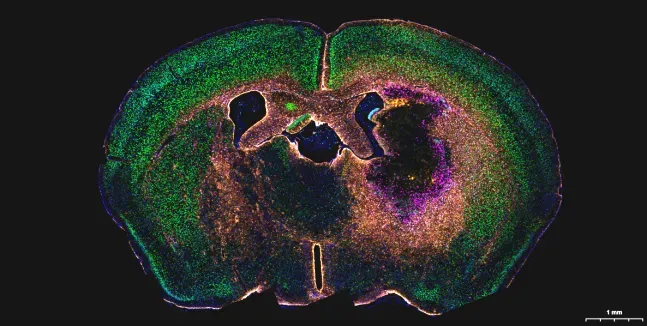
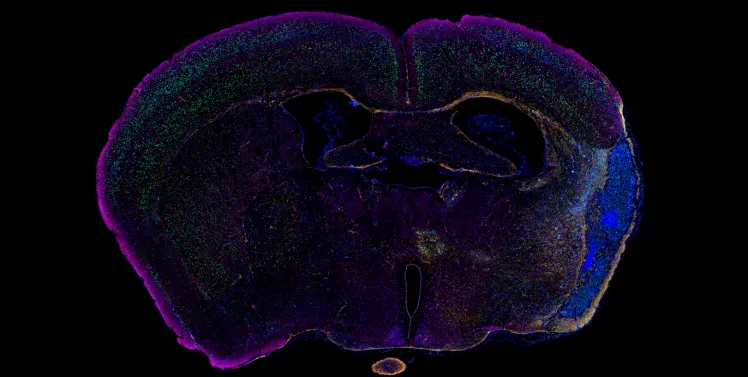
Map The Cell. | Resolve The Context. | Decode The Mechanism. | Translate The Discovery. |

Explore Neuroscience Research Tools
Decoding Brain Complexity Across Biological Scales
From Molecular Events to Neural Function, Disease Mechanisms & Translational Discovery
The nervous system is governed by dynamic interactions across multiple biological scales—from molecular regulation and cellular identity to synaptic communication, neural circuits, spatial organization, behavior, and disease progression.
Understanding brain biology therefore requires more than measuring individual targets. Researchers increasingly need to connect molecular changes with cellular states, cellular interactions, spatial context, functional outcomes, and disease mechanisms.
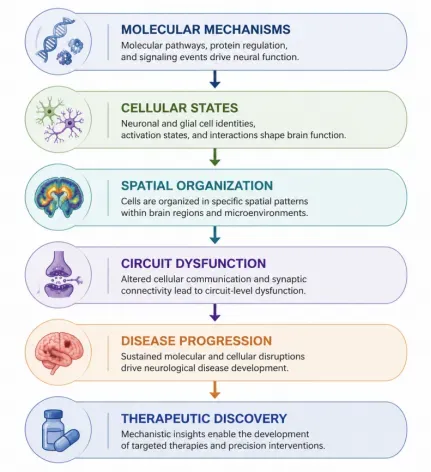
Multi-Scale Neuroscience Discovery
From Molecular Mechanisms to Neural Function and Translational Insights
| Biological Scale | Core Research Question | Representative Biological Readouts |
|---|---|---|
| 01 Molecular | What molecular mechanisms regulate neural function? | Protein expression · PTMs · Signaling pathways · Protein aggregation · Epigenetic regulation |
| 02 Cellular | Which neural cell types and states drive function and dysfunction? | Neuronal identity · Glial identity · Cell states · Differentiation · Activation · Cell–cell interactions |
| 03 Synaptic | How do neurons communicate and undergo plasticity? | Pre-/post-synaptic organization · Neurotransmitter receptors · Active-zone proteins · Synaptic plasticity |
| 04 Circuit | How do neural interactions shape circuits and information processing? | Neural connectivity · Circuit organization · Activity-associated signaling · Network interactions |
| 05 Spatial | Where do molecular and cellular events occur within neural tissues? | Tissue architecture · Spatial cell states · Regional pathology · Cell–cell proximity · Spatial biomarkers |
| 06 Functional | How do molecular, cellular, and circuit changes influence neural function? | Neural activity · Synaptic plasticity · Learning · Memory · Motor function · Behavioral phenotypes |
| 07 Disease | How do molecular and cellular disturbances drive neurological disease? | Neuroinflammation · Neurodegeneration · Proteinopathy · Synaptic dysfunction · Neurovascular dysfunction |
| 08 Translation | Which biological changes can support therapeutic development and clinical translation? | Biomarker discovery · Target validation · Mechanism of action · Therapeutic response · Translational validation |
UcallM Neuroscience Solution Perspective
Connecting Molecular Precision with Systems-Level Neuroscience
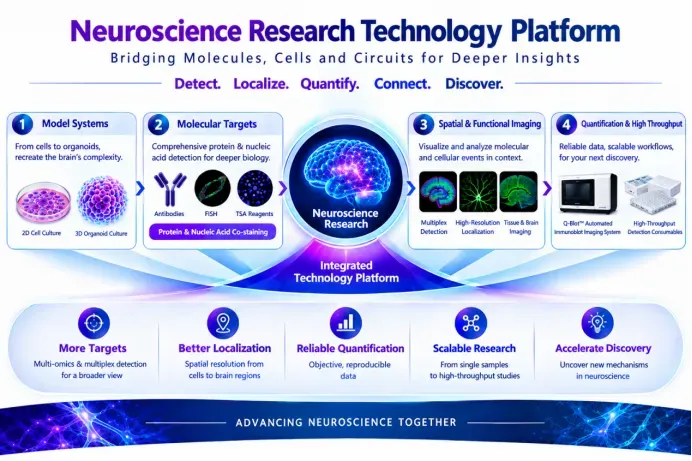
UcallM integrates antibody-based detection, protein and PTM analysis, cellular and organoid models, spatial biology, nucleic acid delivery, and functional research technologies to support neuroscience discovery across biological scales.
Our solutions connect molecular events, cellular identity and state, synaptic organization, spatial context, functional outcomes, and disease mechanisms, enabling researchers to move from target validation and cellular characterization to spatial profiling, disease modeling, biomarker discovery, and translational research.
Integrated Neuroscience Research Solutions
From Targets to Biological Insight
UcallM integrates molecular detection, advanced neural models, spatial profiling, functional analysis, and translational research technologies to help researchers connect biological events across scales.
| Research Area | Research Focus | UcallM Research Solutions |
|---|---|---|
| Neural Cell Identity & Heterogeneity | Define neuronal and glial identities, subtypes, and cellular states | Cell Identity Panels · Validated Antibodies · Flow Cytometry · IF/IHC · Spatial Cell Profiling |
| Neural Signaling & Molecular Regulation | Decode pathways, receptors, PTMs, and molecular mechanisms | Signaling Panels · PTM Antibodies · WB · IF/IHC · IP · Protein Interaction Analysis |
| Synaptic Biology & Plasticity | Resolve synaptic organization, communication, and plasticity | Synaptic Marker Panels · Receptor Profiling · Multiplex Imaging · Protein Analysis · Spatial Localization |
| Neuroimmune Interactions | Characterize glial activation, inflammatory signaling, and immune–neural crosstalk | Glial Marker Panels · Cytokine/Inflammatory Profiling · Multiplex IF/IHC · Flow · Spatial Immune Profiling |
| Neurodegeneration & Proteinopathy | Identify pathological proteins, PTMs, aggregation, and neurodegenerative signatures | Disease Marker Panels · PTM Detection · Proteinopathy Profiling · Multiplex Imaging · Tissue Biomarkers |
| Neurovascular Biology & BBB | Define BBB architecture, cellular components, and dysfunction | BBB Marker Panels · Tight Junction/Transporter Analysis · IF/IHC · Multiplex Imaging · BBB Model Characterization |
| Drug Delivery & Neural Targeting | Develop and evaluate strategies for targeted delivery of therapeutic cargo to neural cells and tissue | Nucleic Acid Delivery · Exosome Engineering · RVG Lipid-Anchor Technology · Neural Targeting · Cargo Delivery Validation · Delivery Efficiency Profiling |
| Neural Models & Organoids | Model neural development, differentiation, and disease mechanisms | Neural Cell Markers · Organoid Cell Culture & Characterization · Differentiation Profiling · Protein Analysis |
| Spatial Neuroscience | Resolve tissue architecture, spatial cell states, and cellular interactions | Multiplex IF/IHC · Spatial Profiling · Cell–Cell Interaction Analysis · Tissue Biomarker Mapping |
| Translational Neuroscience | Translate molecular and cellular findings into biomarkers and therapeutic evidence | Biomarker Panels · Target Validation · MoA Studies · Therapeutic Response · Neurotoxicity · Translational Validation |
Selected References
Scientific Evidence for Neuroscience Research
- Wu D, Chen Q, Chen X, Han F, Chen Z, Wang Y. The blood–brain barrier: Structure, regulation and drug delivery. Signal Transduct Target Ther. 2023;8:217.
- O'Halloran L, Akinsete O, Kogan AL, Wrona M, Mahdi AF. 3D in vitro blood-brain barrier models: recent advances and their role in brain disease research and therapy. Front Pharmacol. 2025;16:1637602.
- Sato Y, Falcone-Juengert J, Tominaga T, Su H, Liu J. Remodeling of the Neurovascular Unit Following Cerebral Ischemia and Hemorrhage. Cells. 2022;11(18):2823.
- Obermeier B, Daneman R, Ransohoff RM. Development, maintenance and disruption of the blood-brain barrier. Nat Med. 2013;19(12):1584–1596.
- Kim S, Jung UJ, Kim SR. The Crucial Role of the Blood–Brain Barrier in Neurodegenerative Diseases: Mechanisms of Disruption and Therapeutic Implications. J Clin Med. 2025;14(2):386.
- Wang Q, Wang D, Liu P, Tang BZ, Li Y, Yin X. Inflammation-targeted nanoplatform: NIR-II imaging-guided encephalitis suppressing by dual antioxidant-ferroptosis action. Biomaterials. 2026 Apr;327:123741.
- Izco M, Sola C, Schleef M, Schmeer M, de Toro M, Verona G, Carlos E, Reinares-Sebastian A, Colina S, Marzo-Sola ME, Garcia-Sanmartin J, Fernández-Irigoyen J, Santamaría E, Mugica-Vidal R, Blesa J, Alvarez-Erviti L. Development of human targeted extracellular vesicles loaded with shRNA minicircles to prevent parkinsonian pathology. Transl Neurodegener. 2025 May 26;14(1):26.
- Gupta A, Ramanathan R, Raulji CM, I Mahato R. Nanoparticulate delivery and targeting of RNA to the brain. Biochim Biophys Acta Rev Cancer. 2025 Nov;1880(6):189480.
- Ding L, Xiao Y, Xu Z, Zhu Z, Gan T, Huang X, Shu H, Liang X, Mo M, Huang X, Zhu X, Huang W, Xu P, Zhang W. RVG-targeted extracellular vesicles loaded with echinatin attenuate dopaminergic neurodegeneration via the IGF-2/PI3K/Akt pathway in Parkinson's disease mice. J Nanobiotechnology. 2026 Jan 7;24(1):117.