
info@mail.ucallm.com
1. Overview
1.1 What Is Cell‑Free Protein Expression
Cell‑Free Protein Expression (CFPE), also referred to as Cell‑Free Protein Synthesis (CFPS) or Cell‑Free Gene Expression (CFGE), is a technology that enables the direct synthesis of proteins in an in vitro environment using cellular transcription‑translation machinery extracted from living cells. Unlike conventional cell‑based expression, this approach does not rely on intact living cells; instead, it harnesses core biological components‑ribosomes, transcription factors, translation factors, tRNAs, and enzyme systems‑extracted from cells, and carries out the complete process from gene to protein in a precisely controlled artificial reaction system.
1.2 Core Principles
The core of cell‑free protein expression is the in vitro transcription‑translation process. The fundamental principle is to recreate the protein‑synthesis microenvironment of the cell outside the cell, using extracts that supply ribosomes, translation factors, aminoacyl‑tRNA synthetases, and other essential components, combined with energy‑regeneration systems, amino acids, nucleotides, and template nucleic acids, to accomplish the conversion from gene to functional protein.
A complete cell‑free protein expression system theoretically comprises four parts: cell extract, auxiliary factors, expression template, and optional additives.
Cell‑free expression systems can operate in two modes:
- Coupled mode: Using DNA as the template, transcription and translation proceed simultaneously in the same reaction vessel. This is the most commonly used mode.
- Uncoupled mode: Using pre‑transcribed mRNA as the template, only translation occurs. This mode is suitable when independent control over transcription and translation steps is desired.
2. Advantages
- Rapid expression: A one‑step method that allows for protein expression within a few hours to one day.
- Simple operation: Eliminates traditional cell expression steps such as transfection and culture; protein production requires only mixing the template with the reaction components.
- Wide applicability: Capable of expressing a variety of proteins, including cytokines, antibodies, membrane proteins, toxic proteins, and inclusion body proteins.
- High stability: Unaffected by fluctuations in cell condition or interference from other impurities, ensuring high stability between batches.
- Open reaction system: Facilitates adjustment of various reaction conditions, enabling regulation of gene transcription, protein synthesis, and post‑translational modifications, while preventing the formation of inclusions.
- Compatible with automated equipment: Enables automated, high‑throughput protein expression in multi‑well plates (e.g., 96‑well plates), meeting the demand for high‑throughput protein screening within a short timeframe. Suitable for applications such as enzyme‑directed evolution screening and AI‑driven protein manufacturing.
3. Workflow
3.1 Procedure
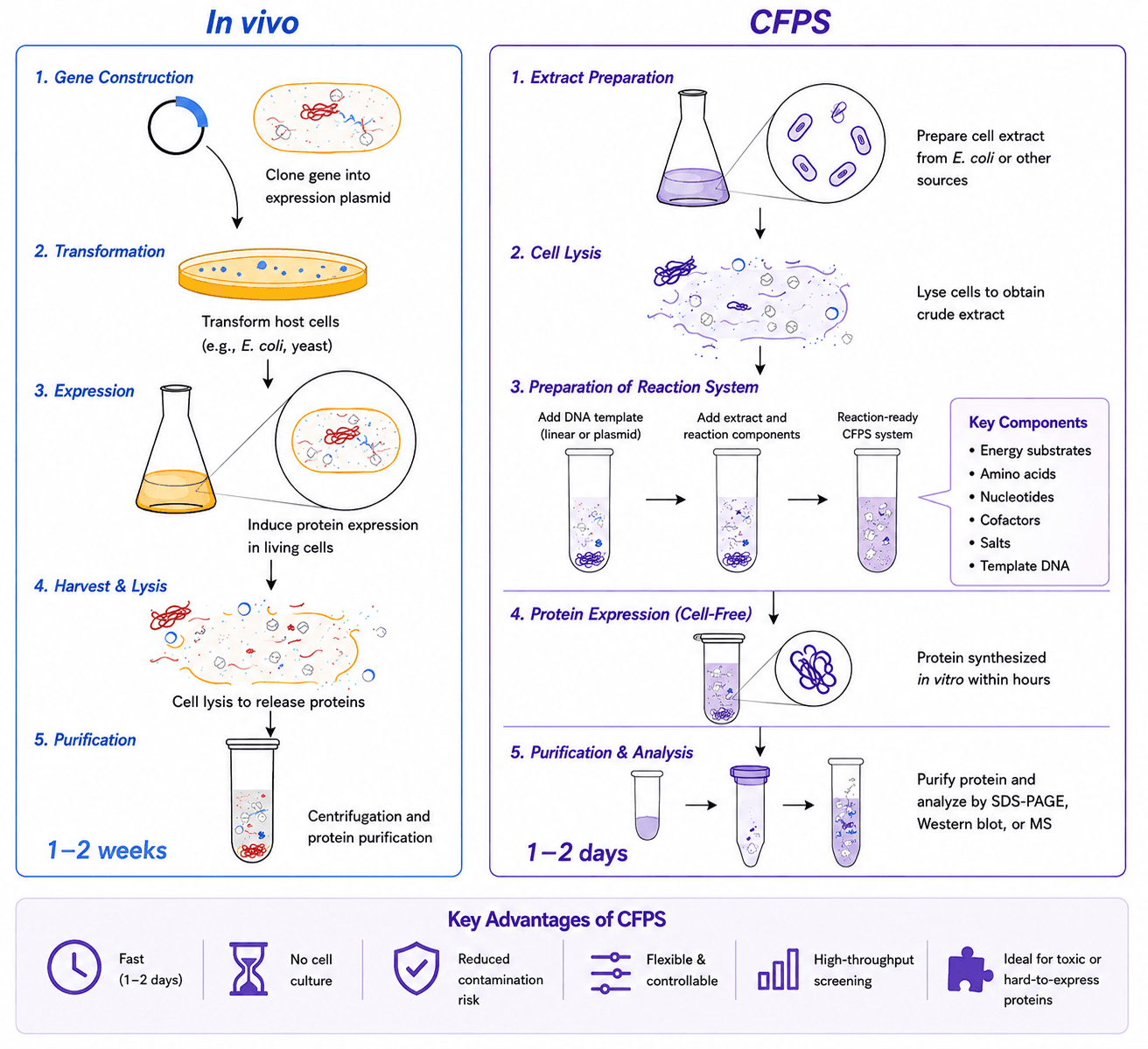
A standard cell‑free protein expression workflow generally comprises three major stages:
Stage 1: Cell culture and harvesting
- The host cells are cultured to logarithmic phase in appropriate medium.
- Cells are collected by centrifugation.
Stage 2: Cell‑extract preparation
- Cells are disrupted by sonication, high‑pressure homogenisation, or French Press.
- Cellular debris and unbroken cells are removed by high‑speed centrifugation.
- A pre‑incubation step eliminates endogenous mRNA and consumes endogenous energy.
- Dialysis removes small‑molecule inhibitors and equilibrates the buffer.
Stage 3: Protein synthesis reaction
- The cell extract is mixed with the reaction mixture containing DNA template, RNA polymerase, nucleotides, amino acids, and other components.
- The mixture is transferred to PCR plates or reaction vessels.
- Incubation is performed at an appropriate temperature (typically 25‑37℃) for at least 3 hours.
- After expression, the protein is purified, quantified, and used for downstream applications.
3.2 Reaction Mixture Composition
A complete cell‑free protein expression reaction typically contains:
- Cell extract or PURE‑system components: supplying ribosomes, tRNAs, translation factors, enzymes, etc.
- Genetic template: DNA (plasmid or linear PCR product) or mRNA.
- Amino acids: a mixture of the 20 standard amino acids.
- Energy substrates: nucleotide triphosphates such as ATP and GTP.
- Energy‑regeneration system: e.g., creatine phosphate/creatine kinase system.
- Salts: Mg2+, K+, and others.
- Buffer: to maintain an appropriate pH.
- Cofactors: such as NADH, CoA, etc.
3.3 Template Preparation
Cell‑free expression systems are compatible with multiple template formats:
DNA templates:
- Plasmid DNA: circular double‑stranded DNA carrying the target gene and complete expression elements (promoter, RBS, terminator, etc.).
- Linear DNA: including PCR products and linearised plasmids; their advantage is that they bypass all cell‑culture steps.
RNA templates: in vitro‑transcribed mRNA, used directly for translation in uncoupled mode.
4. System
4.1 Cell‑Extract‑Based Systems
CFPS systems are typically categorized based on the source of the cellular extract into prokaryotic and eukaryotic systems. Different systems vary significantly in expression efficiency, ability to support complex proteins, and cost, making system selection crucial for high‑throughput screening applications.
| Source | Advantages | Limitations |
|---|---|---|
| E. coli |
|
|
| Wheat Germ |
|
|
| Rabbit Reticulocyte Lysate |
|
|
| Insect Cells |
|
|
| Yeast |
|
|
| Human Cell |
|
|
4.2 The PURE Systems
The PURE (Protein synthesis Using Recombinant Elements) system is a completely defined cell‑free protein synthesis platform assembled from individually purified recombinant proteins.
The PURE system typically contains approximately 36 purified proteins, tRNAs, ribosomes, and necessary auxiliary factors, including initiation factors (IF1, IF2, IF3), elongation factors (EF‑G, EF‑Tu, EF‑Ts), release factors (RF1, RF3), ribosome recycling factor (RRF), 20 aminoacyl‑tRNA synthetases, methionyl‑tRNA formyltransferase, T7 RNA polymerase, and ribosomes.
Key advantages of the PURE system:
- Precise composition: all components are known purified proteins, free from contaminating proteases; the system is stable and highly deterministic.
- No background expression: no endogenous nucleic acids or proteins.
- High controllability: concentrations of each component can be precisely tuned.
- Suitable for ncAA incorporation: the defined environment facilitates the introduction of non‑canonical amino acids.
5. Optimization Strategies
5.1 Template Optimisation
Codon optimisation:
Codon optimisation is a critical strategy for improving cell‑free expression yields. Optimisation strategies include:
- The first 30 codons should use only high‑frequency codons.
- Avoid more than two rare codons within any 10‑nucleotide window.
- Keep the total rare‑codon content below 5 % of the coding sequence.
- Target a GC content of 40‑60 % for balanced expression.
mRNA secondary‑structure optimisation:
Predict mRNA secondary structures and optimise the 5’ untranslated region (5’ UTR) to reduce secondary‑structure stability and enhance translation initiation efficiency.
Protection of linear DNA templates:
Linear DNA templates are susceptible to nuclease degradation in the reaction. Protective sequences or nuclease inhibitors can be used to stabilise the template.
5.2 Reaction‑Condition Optimisation
- Temperature: Most systems operate at 25‑37℃, adjusted according to enzyme activity and template stability.
- pH: Typically maintained at pH 7.5‑8.5 to avoid pH‑induced enzyme inactivation.
- Ionic strength: Mg2+ and K+ concentrations significantly affect synthesis efficiency and should be empirically optimised.
- Energy‑regeneration system: Energy supply is a key limiting factor. Common regeneration systems include the creatine phosphate/creatine kinase system, glycolytic intermediate systems, and the pyruvate oxidase system.
- Redox environment: Reducing agents (e.g., DTT, GSH) can prevent incorrect disulfide bond formation, while aeration can maintain an oxidising environment when needed.
5.3 Yield‑Enhancement Strategies
- System‑composition optimisation: Adjust component concentrations, add chaperones, optimise the energy‑regeneration system, etc.
- Reaction‑time extension: Continuously replenish energy components and low‑molecular‑weight building blocks to extend the reaction time. In the PURE system using a meso‑scale dialysis device, protein expression has been sustained for up to 16 days.
- AI‑guided optimisation: Active‑learning methods have been used to explore a combinatorial space of approximately 4 million buffer compositions to maximise protein yield.
5.4 Protein‑Specific Optimisation for Difficult Targets
Membrane proteins:
- Add nanodiscs to provide a lipid‑bilayer environment.
- Supplement with liposomes or appropriate detergents to assist folding.
- Optimise the expression template.
Toxic proteins:
- Leverage the non‑toxic nature of cell‑free systems.
- Adjust reaction conditions in real time to optimise folding.
Proteins with non‑canonical amino acids:
- Directly add ncAAs to the reaction mixture.
- The PURE system is particularly well suited for this application.
Folding assistance:
- Add molecular chaperones (e.g., GroEL/ES, DnaK/J).
- Modulate the redox environment to promote correct disulfide‑bond formation.
- Attach solubility tags such as MBP, SUMO, or GST.
- For metalloproteins, supplement with Zn2+, Mn2+, Ca2+, etc., to stabilise structure and maintain catalytic activity.
6. Applications
6.1 Rapid Protein Expression & Functional Validation
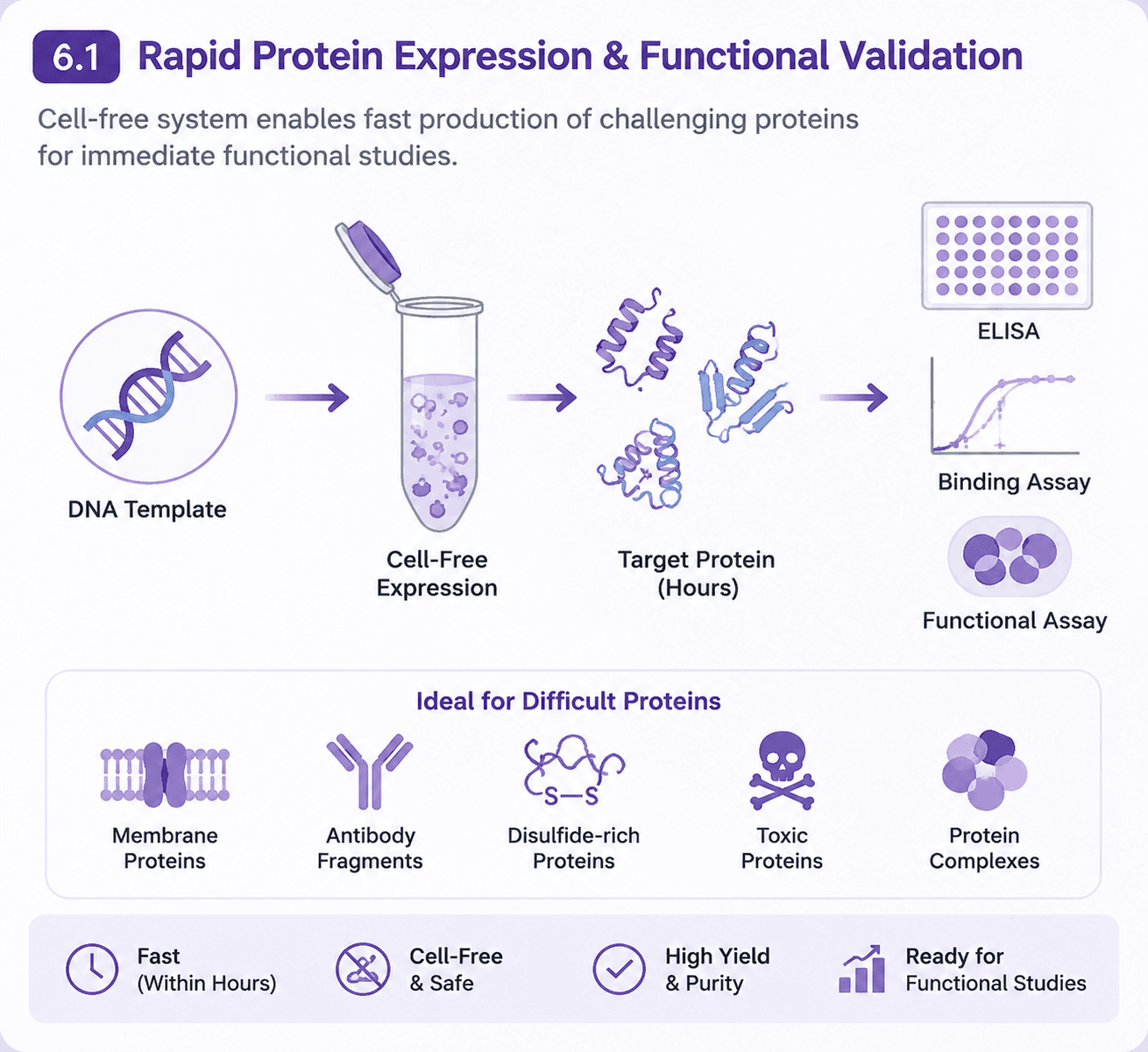
CFPS enables rapid production of recombinant proteins directly from DNA templates without cell culture, providing an efficient solution for proteins that are difficult to express in conventional systems
- Membrane proteins
- Disulfide‑rich proteins
- Toxic proteins
- Protein complexes
- Antibody fragments (scFv, Fab, VHH)
Key Advantages
- Cell‑free environment eliminates host toxicity and metabolic interference
- Rapid protein production within hours
- Enables direct functional characterization and optimization
6.2 AI‑Driven Protein Design & Engineering
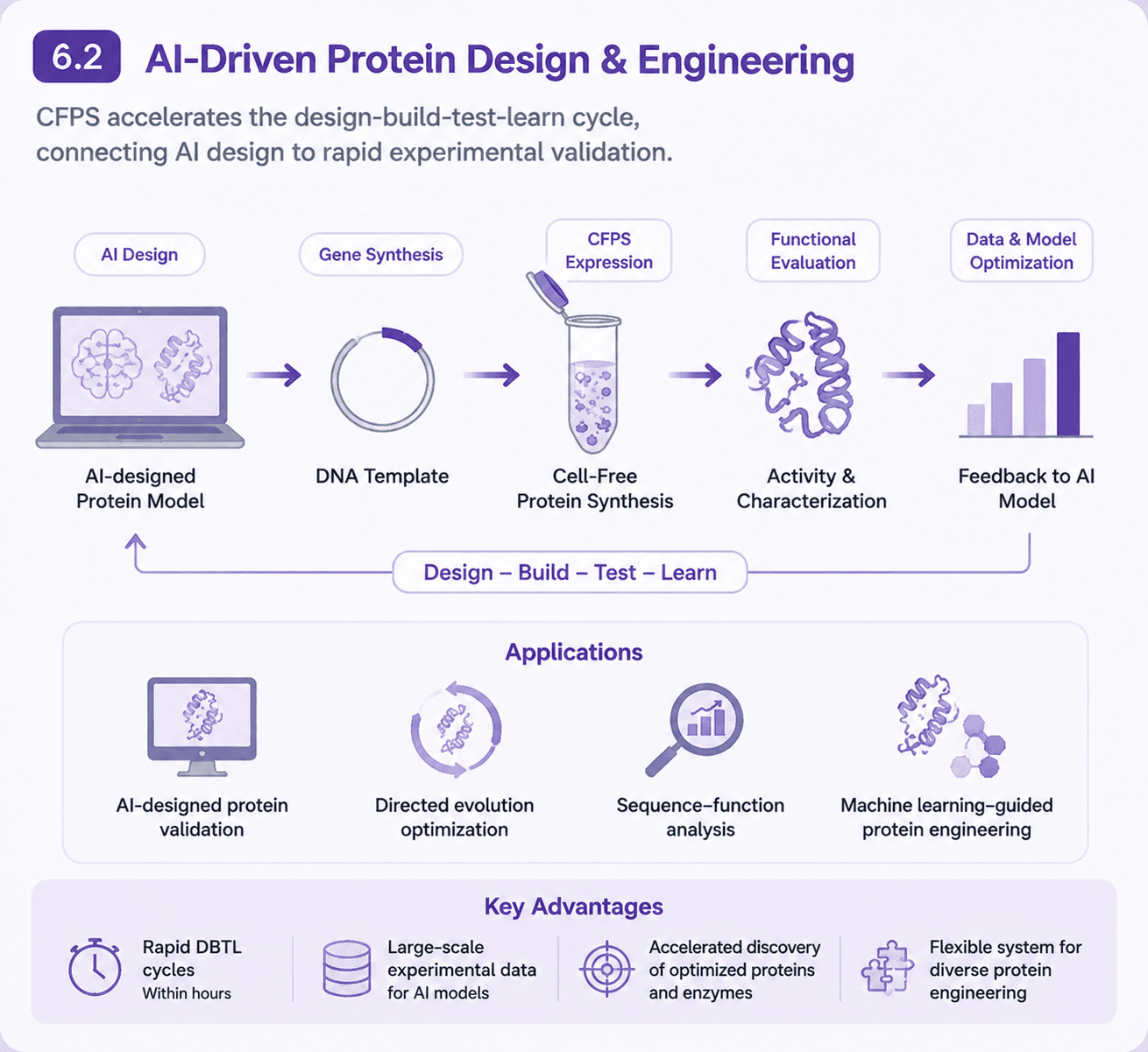
The combination of CFPS and artificial intelligence creates a closed‑loop workflow from computational protein design to experimental validation. CFPS provides rapid prototyping and high‑throughput experimental data generation, enabling accelerated optimization of AI‑designed proteins.
- AI‑designed protein expression validation
- Machine learning‑guided protein engineering
- Directed evolution optimization
- Sequence‑function relationship analysis
Key Advantages
- Rapid design‑build‑test‑learn (DBTL) cycles
- Generates large‑scale experimental datasets for AI models
- Accelerates discovery of optimized proteins and enzymes
6.3 High‑Throughput Screening Platform
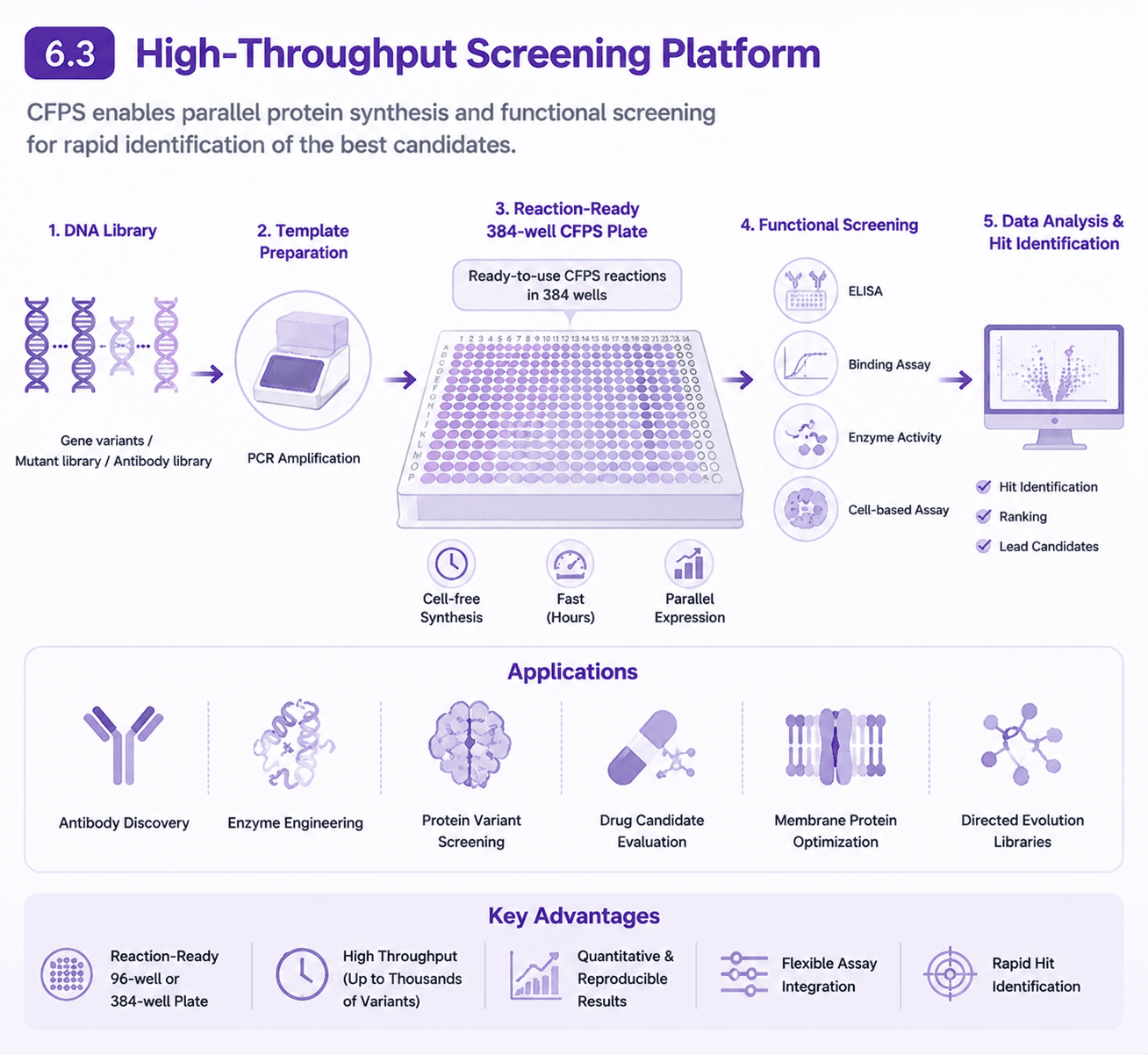
The open reaction environment of CFPS enables parallel protein synthesis and functional screening in microplate and microfluidic platforms.
- Antibody discovery
- Enzyme engineering
- Protein variant screening
- Drug candidate evaluation
Key Advantages
- Direct expression from PCR‑generated DNA templates
- Compatible with 96/384‑well and microfluidic systems
- Supports thousands to millions of protein variants screening
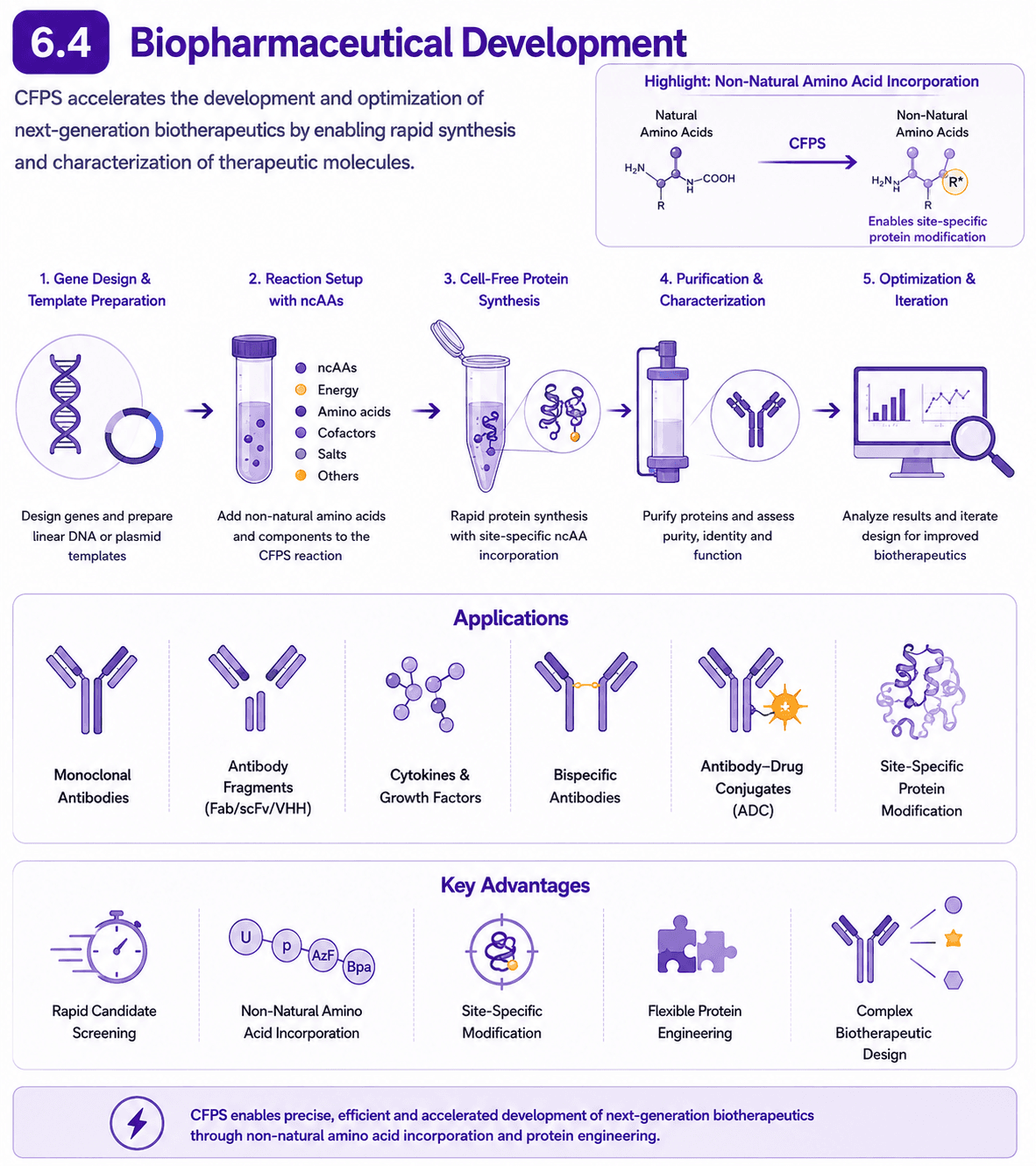
6.4 Biopharmaceutical Development
CFPS accelerates the development and optimization of next‑generation biotherapeutics by enabling rapid synthesis and characterization of therapeutic molecules.
- Monoclonal antibodies
- Antibody fragments (Fab/scFv/VHH)
- Cytokines and growth factors
- Antibody‑drug conjugates (ADC)
- Bispecific antibodies
- Site‑Specific Protein Modification
Key Advantages
- Rapid candidate screening
- Supports non‑natural amino acid incorporation
- Enables site‑specific protein modification
- Flexible Protein Engineering
- Complex Biotherapeutic Design
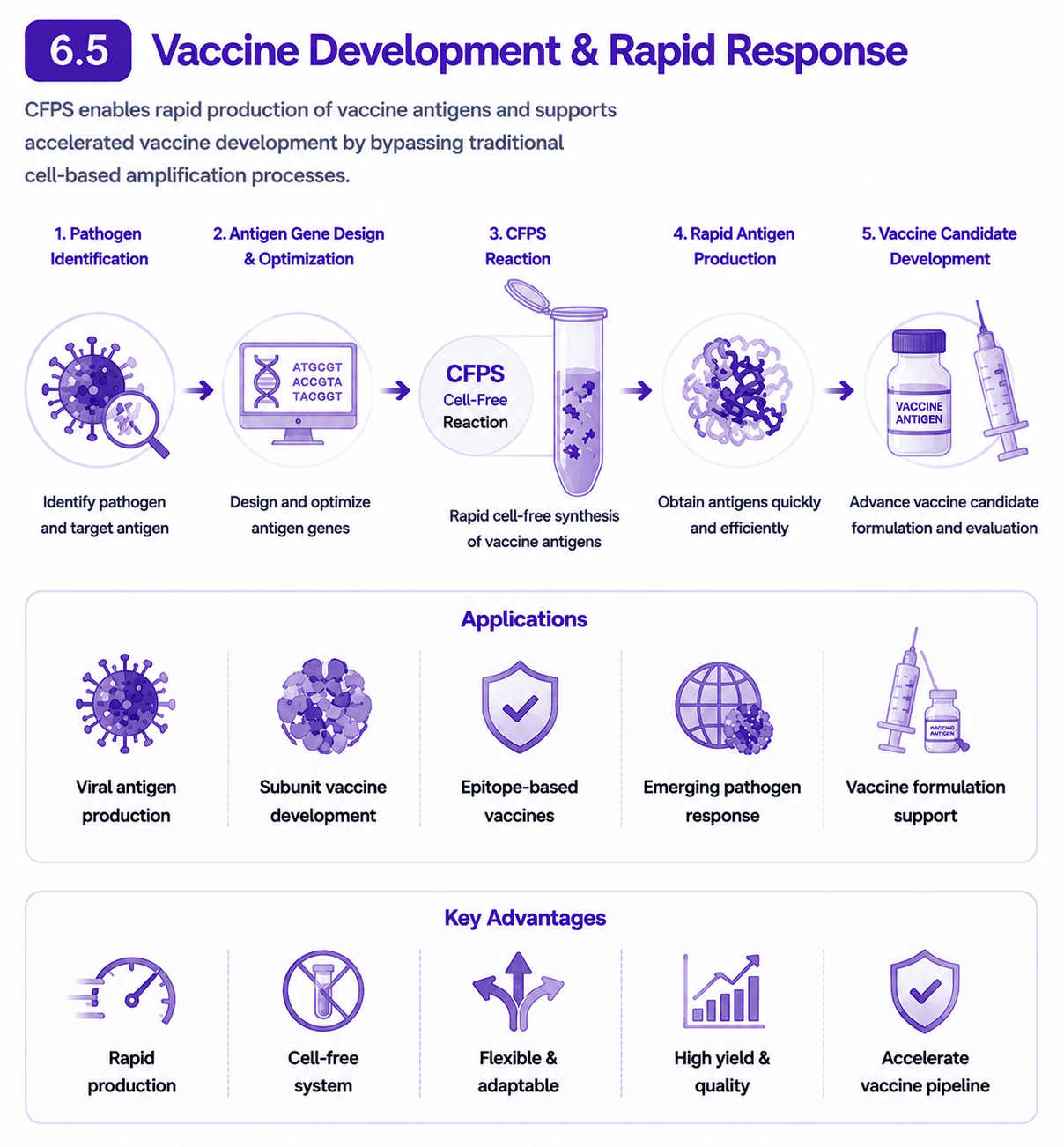
6.5 Vaccine Development & Rapid Response
CFPS enables rapid production of vaccine antigens and supports accelerated vaccine development by bypassing traditional cell‑based amplification processes.
- Viral antigen production
- Subunit vaccine development
- Emergency pathogen response
Key Advantages
- Rapid antigen generation within hours
- Flexible response to emerging pathogens
- Suitable for rapid evaluation of vaccine candidates
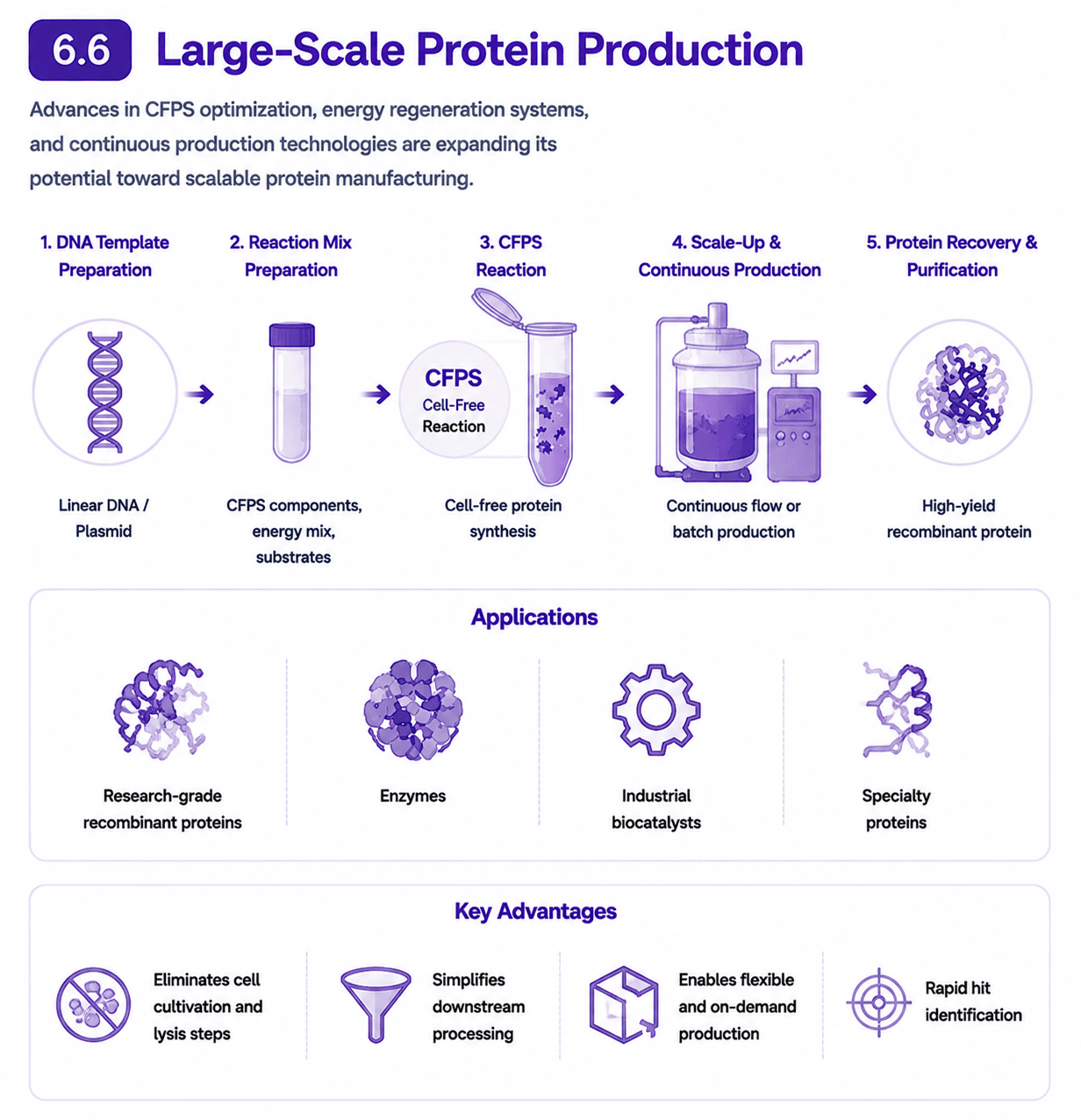
6.6 Large‑Scale Protein Production
Advances in CFPS optimization, energy regeneration systems, and continuous production technologies are expanding its potential toward scalable protein manufacturing.
- Research‑grade recombinant proteins
- Enzymes
- Industrial biocatalysts
- Specialty proteins
Key Advantages
- Eliminates cell cultivation and lysis steps
- Simplifies downstream processing
- Enables flexible and on‑demand production
6.7 Industrial Biotechnology & Synthetic Biology
CFPS provides a cell‑free chassis for constructing synthetic biological systems, enabling controlled biosynthesis of valuable molecules.
- Multi‑enzyme pathway reconstruction
- Metabolic engineering
- Biosynthesis of chemicals and biomaterials
Key Advantages
- Precise control of enzyme ratios
- Avoids cellular toxicity caused by intermediates
- Enables modular pathway optimization