
info@mail.ucallm.com
We provide an integrated research solution — from stemness-associated targets to functional differentiation assays — enabling comprehensive studies of stem cell maintenance and fate determination.
Key Target Highlights
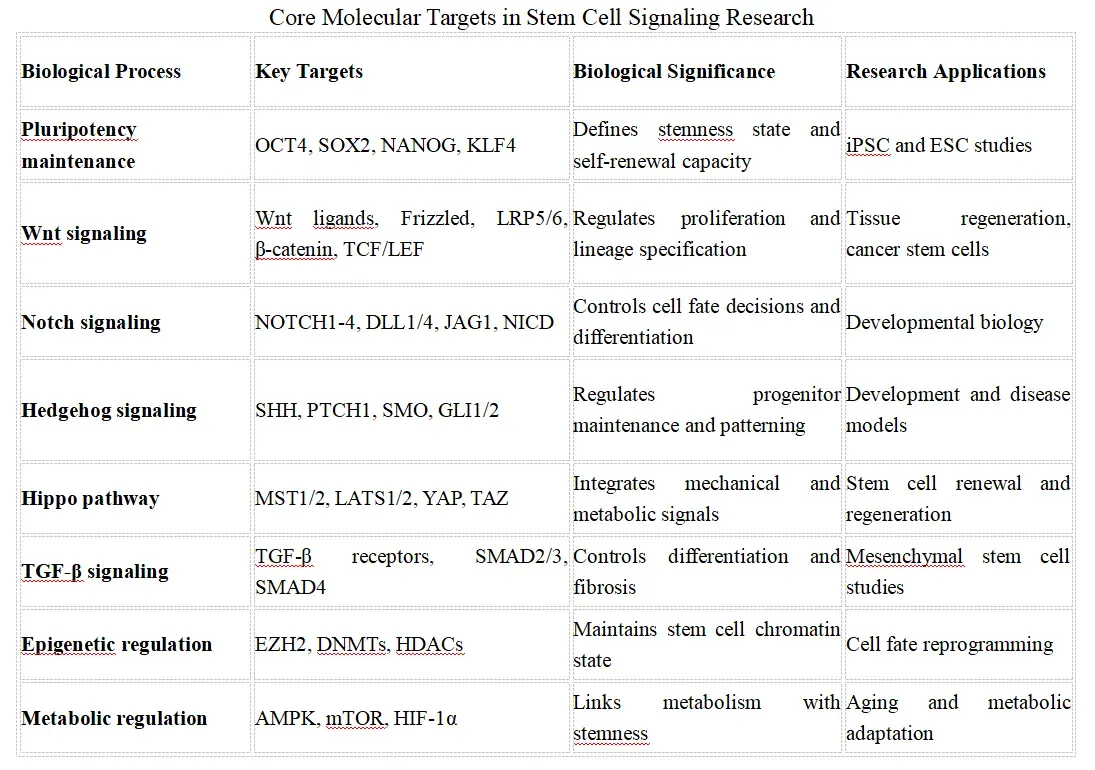
Key research trend:
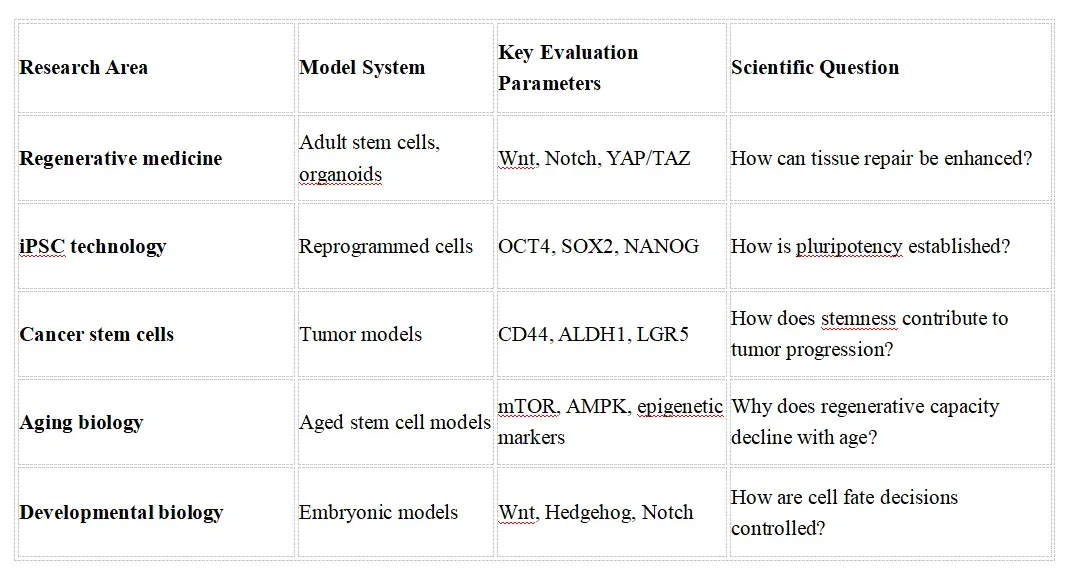
Modern stem cell research is moving beyond the classical pluripotency factor model (OCT4/SOX2/NANOG) toward an integrated understanding of signaling networks, tissue niches, mechanical regulation, metabolism, and epigenetic remodeling. Current studies increasingly combine single-cell technologies, organoid models, and functional genomics to define stem cell heterogeneity and improve regenerative medicine and cancer stem cell research
Recommended Stem Cell Marker Strategy
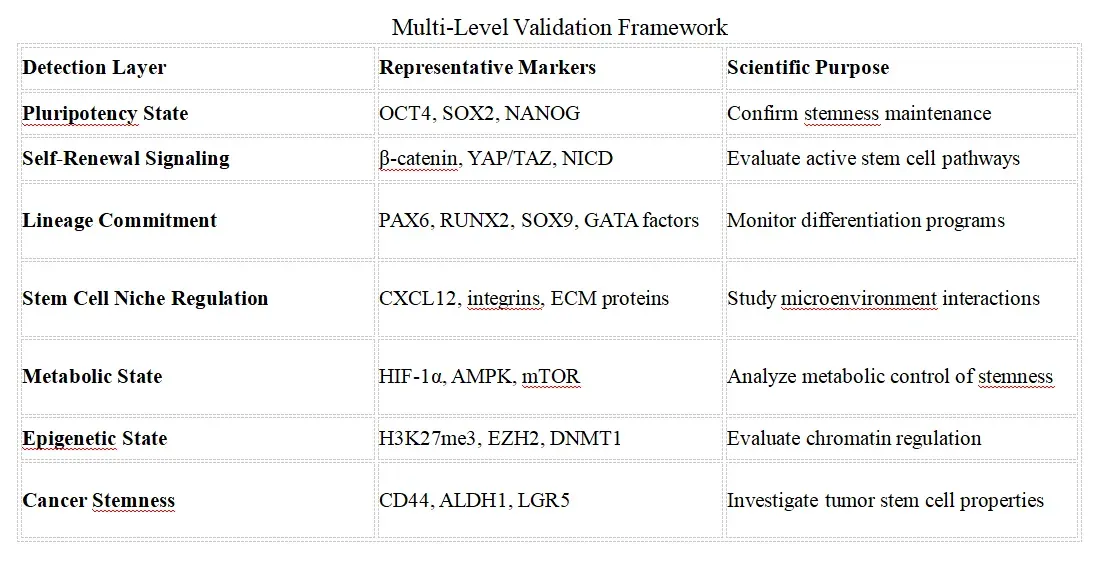
Core Stem Cell Validation Strategy
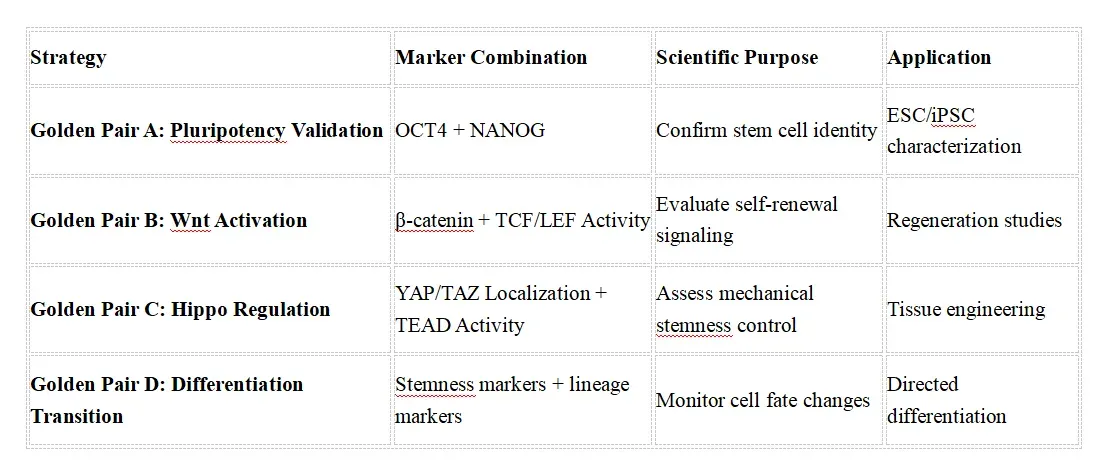
Competitive Technology Landscape
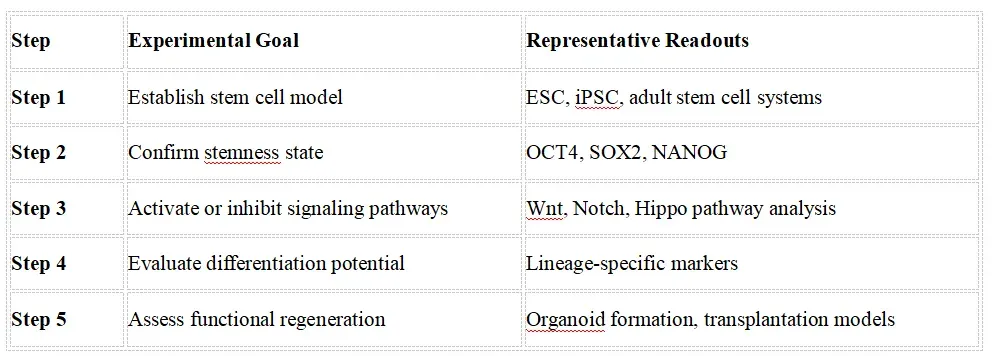
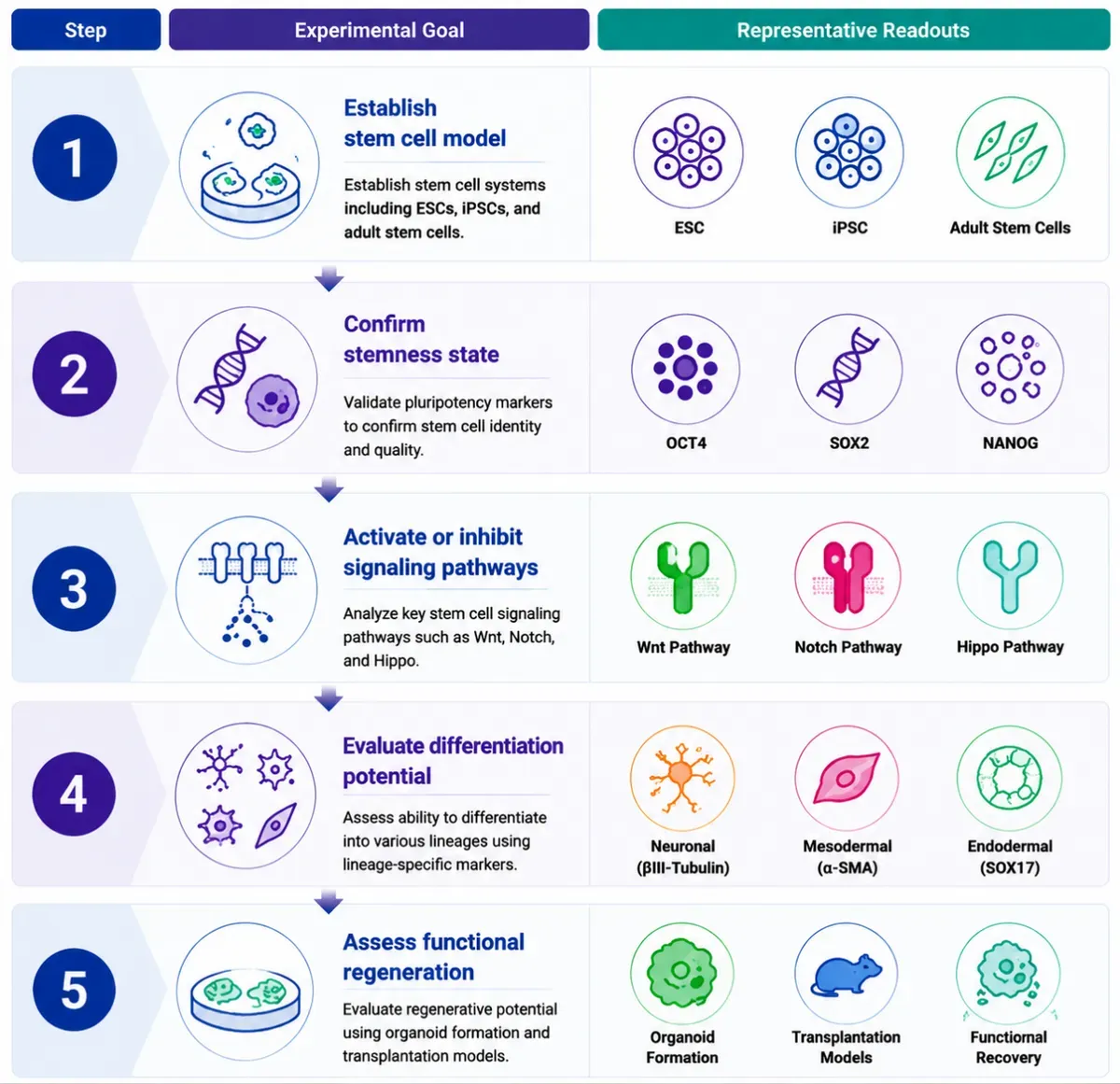
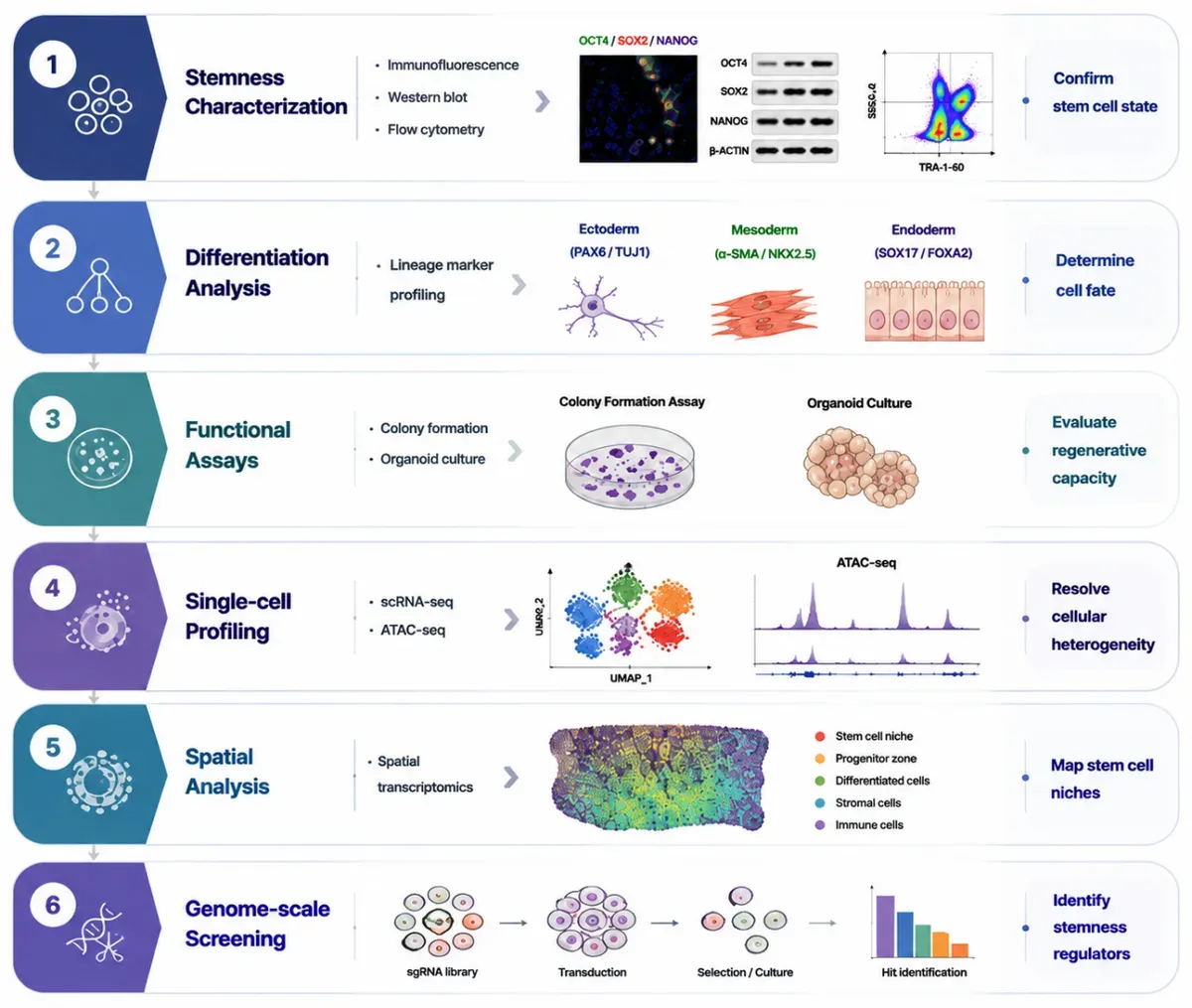 Stem cell research requires a comprehensive workflow integrating stemness characterization, lineage differentiation analysis, functional validation, single-cell profiling, spatial mapping, and genome-scale screening. This integrated strategy enables researchers to define stem cell states, uncover regulatory mechanisms, and translate discoveries into regenerative medicine and disease modeling applications.
Pathway Overview
Stem cell maintenance and differentiation are controlled by integrated signaling networks that regulate self-renewal, lineage commitment, and tissue regeneration. Major pathways, including Wnt/β-catenin, Notch, Hedgehog, Hippo-YAP/TAZ, TGF-β, and pluripotency transcription factors (OCT4, SOX2, NANOG), determine stem cell identity and fate. Stem cell signaling research advances regenerative medicine, developmental biology, and cancer stem cell studies. 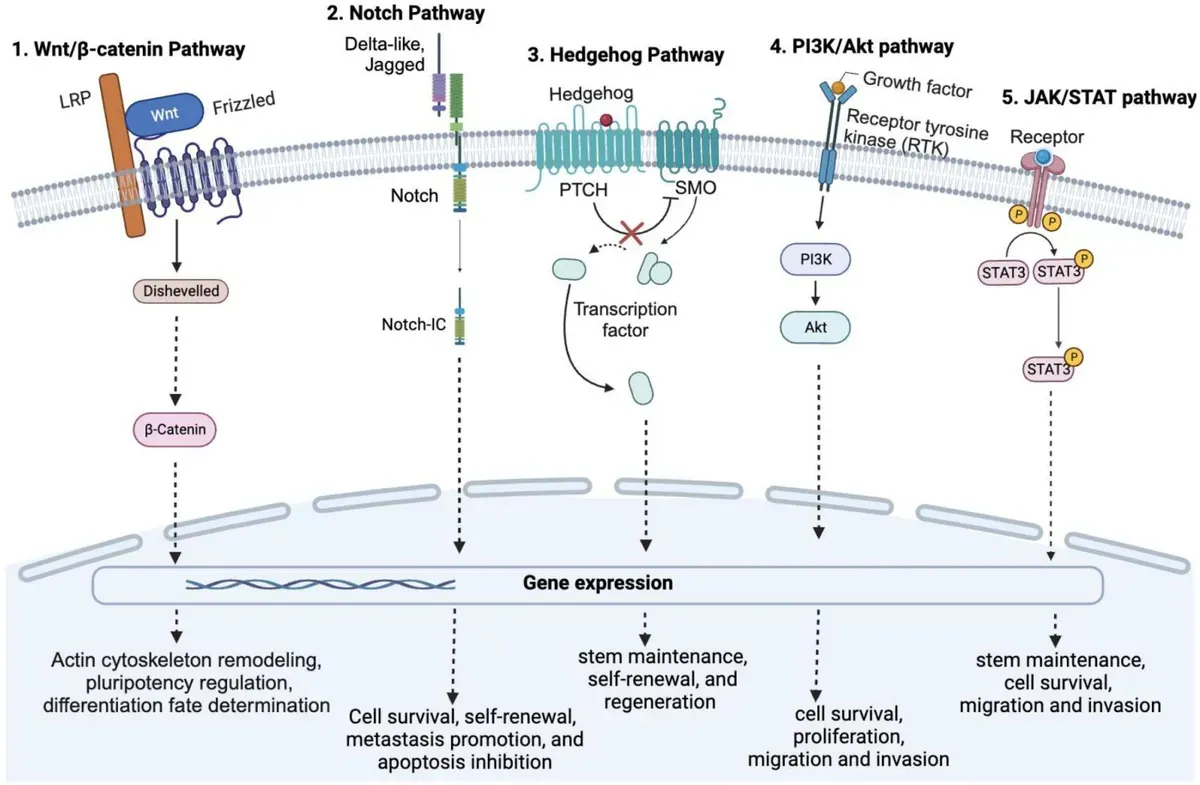 Representative upregulated signal pathways that contribute to the stemness, survival, self-renewal, and invasion of CSCs. (PMID: 38071088)
Recommended Experimental Validation Workflow
Featured Research Application Examples
Frequently Asked Questions
Q1. Which markers should be used to confirm stem cell identity and pluripotency? Stem cell characterization requires a combination of core pluripotency markers, lineage markers, and functional assays. Common pluripotency markers include OCT4 (POU5F1), SOX2, NANOG, TRA-1-60, TRA-1-81, and SSEA-4 for human pluripotent stem cells. Additional markers such as NESTIN, PAX6, BRACHYURY, and SOX17 are used to evaluate lineage commitment during differentiation. Reliable stem cell studies integrate marker expression analysis, morphology assessment, and differentiation potential assays rather than relying on a single marker.
Q2. How can researchers validate successful stem cell differentiation? Differentiation validation requires evaluation of stage-specific lineage markers and functional characteristics. Common approaches include immunofluorescence, Western blot, flow cytometry, and transcriptomic analysis to monitor lineage-specific programs. For example, neuronal differentiation can be assessed using TUJ1, MAP2, and NeuN, while mesodermal or endodermal differentiation can be evaluated using markers such as NKX2.5, α-SMA, SOX17, and FOXA2. Functional assays are essential to confirm that differentiated cells acquire expected biological properties.
Q3. What are the key signaling pathways regulating stem cell maintenance and differentiation? Stem cell fate is controlled by multiple conserved signaling networks. Major pathways include Wnt/β-catenin, which regulates self-renewal and lineage specification; Notch, which controls cell fate decisions; Hedgehog, involved in development and tissue regeneration; and BMP/TGF-β signaling, which regulates differentiation and pluripotency maintenance. Additional regulators such as PI3K/AKT, mTOR, and MAPK pathways influence stem cell metabolism, proliferation, and survival.
Q4. What are the common challenges and pitfalls in stem cell research? Major challenges include cell state heterogeneity, incomplete differentiation, genetic instability, and variability between stem cell lines. Common pitfalls include relying on limited marker panels, insufficient characterization of differentiation states, and lack of functional validation. Best practices include combining multiple stem cell markers, genomic quality assessment, differentiation assays, and single-cell analysis to ensure reproducibility and biological relevance.
Q5. How can stem cell research be translated into regenerative medicine and disease modeling? Advanced stem cell studies integrate organoid models, single-cell sequencing, spatial analysis, genome editing, and functional screening to investigate disease mechanisms and therapeutic strategies. Stem cells enable applications in regenerative medicine, drug discovery, developmental biology, and personalized medicine by providing systems for modeling human disease, testing therapeutic candidates, and developing cell-based therapies.
Key References
- Bray S.J., Bigas A. (2025).Modes of Notch signalling in development and disease. Nature Reviews Molecular Cell Biology. 26(7):522–537.
- Chen X., Chu Q., Shi Q., et al. (2025).Wnt signaling pathways in biology and disease: mechanisms and therapeutic advances.Signal Transduction and Targeted Therapy. 10:106.
- Driskill J.H., Pan D. (2023).Control of stem cell renewal and fate by YAP and TAZ.Nature Reviews Molecular Cell Biology. 24(12):895–911.
- Yu L., Wei Y., Duan J., et al. (2021).Blastocyst-like structures generated from human pluripotent stem cells.Nature. 591:620–626.