
info@mail.ucallm.com
Decoding Molecular Subtypes, Tumor Evolution, and Therapeutic Resistance — Empowering Precision Breast Cancer Research with Validated Antibody Solutions
Breast cancer is the most frequently diagnosed malignancy among women worldwide and remains a leading cause of cancer-related mortality. Despite significant advances in molecular classification, targeted therapy, endocrine treatment, and immunotherapy, breast cancer continues to represent one of the most heterogeneous tumor types, characterized by diverse genetic alterations, molecular subtypes, tumor microenvironment interactions, and variable therapeutic responses.
Our Breast Cancer Biomarker Research Solutions provide highly validated antibodies targeting clinically relevant and emerging breast cancer markers, supporting comprehensive research applications including:
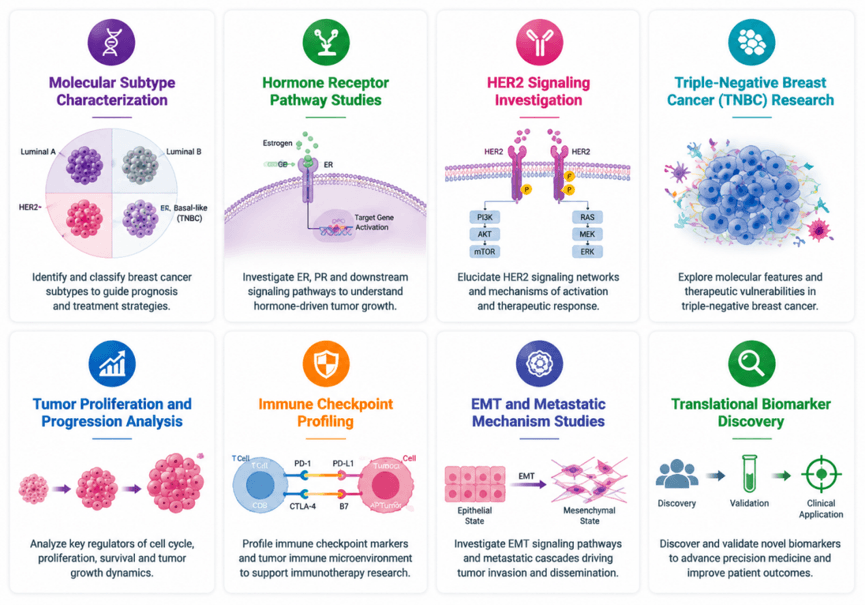
Compatible with FFPE IHC, ICC/IF, and multiplex immunofluorescence, our antibody portfolio enables reliable and reproducible breast cancer biomarker detection from basic discovery research to precision oncology applications.
Breast Cancer Biomarker Antibody Portfolio
——Comprehensive Solutions for Molecular Classification, Prognosis Evaluation, and Therapeutic Research
Breast cancer classification and therapeutic stratification rely on integrated evaluation of receptor status, proliferation markers, oncogenic signaling pathways, immune biomarkers, and metastatic-associated proteins.
Our breast cancer antibody portfolio covers established clinical biomarkers and emerging research targets to support comprehensive investigation of breast cancer biology.
Biomarker Category | Representative Markers | Research Applications | Biological Significance |
Hormone Receptor Biomarkers | ER, PR | Luminal subtype characterization and endocrine response studies | Define hormone-dependent tumor biology |
HER2 Signaling Biomarkers | HER2, ERBB3, GRB7 | HER2 pathway activation and resistance mechanisms | Investigate receptor-driven tumor proliferation |
Proliferation Biomarkers | Ki-67 | Tumor grading and growth assessment | Reflect tumor proliferative activity |
Triple-Negative Breast Cancer Markers | EGFR, CK5, CK14, TP53,AR | TNBC molecular profiling | Characterize aggressive basal-like tumor phenotypes |
Immune Regulation Markers | PD-L1 | Immunotherapy response research | Evaluate tumor immune escape mechanisms |
EMT and Metastasis Markers | Vimentin, E-cadherin , N-cadherin ,Snail | Tumor invasion and metastatic progression studies | Reveal epithelial plasticity and aggressive behavior |
Genomic Instability Markers | TP53 | Tumor evolution studies | Reflect DNA damage response defects and malignant progression |
For Research Use Only. Not for use in diagnostic procedures
Key Breast Cancer Biomarker Targets
——Molecular Functions and Research Applications
Marker | Biological Function | Research Value | Associated Breast Cancer Types |
HER2 / ERBB2 | Receptor tyrosine kinase promoting proliferation and survival signaling | Investigate HER2-driven tumor biology and targeted therapy mechanisms | HER2-positive breast cancer |
ER / ESR1 | Nuclear hormone receptor regulating estrogen-dependent transcription | Define luminal subtype and endocrine therapy response | Luminal A/B breast cancer |
PR / PGR | Progesterone receptor involved in hormone signaling regulation | Refine endocrine responsiveness and prognosis assessment | Hormone receptor-positive tumors |
Ki-67 / MKI67 | Nuclear proliferation marker | Evaluate tumor growth rate and malignant potential | All breast cancer subtypes |
EGFR | Growth factor receptor activating MAPK and PI3K signaling | Study TNBC signaling dependency and therapeutic targets | Triple-negative breast cancer |
GRB7 | HER2-associated adaptor protein involved in receptor signaling | Investigate HER2-associated signaling networks | HER2-amplified tumors |
CK5 / KRT5 | Basal cytokeratin marker | Identify basal-like molecular phenotype | TNBC |
CK14 / KRT14 | Basal epithelial differentiation marker | Support basal subtype characterization | TNBC |
PD-L1 / CD274 | Immune checkpoint ligand regulating T-cell activity | Evaluate immune escape and checkpoint therapy response | TNBC and immune-active tumors |
TP53 | Tumor suppressor controlling genome stability and apoptosis | Study genomic instability and tumor evolution | High-grade tumors and TNBC |
ERBB3 | ERBB family receptor forming signaling complexes with HER2 | Investigate therapeutic resistance mechanisms | HER2-positive breast cancer |
Vimentin | Mesenchymal intermediate filament protein | Analyze EMT activation and metastatic potential | Advanced and metastatic breast cancer |
CD146 / MCAM | Cell adhesion molecule promoting EMT and invasion | Study cancer stemness, migration, and poor prognosis-associated biology | TNBC and EMT-rich tumors |
Featured Breast Cancer Research Panels
——Integrated Biomarker Solutions for Precision Breast Cancer Research
n Luminal Breast Cancer Profiling Panel—Defining Hormone-Dependent Tumor Biology and Endocrine Response
Key Markers
ER | PR | Ki-67 | HER2 | TP53 | GATA3 | FOXA1 |
n HER2-Positive Breast Cancer Panel—Investigating HER2 Signaling and Therapeutic Resistance
Key Markers
HER2 | ERBB3 | GRB7 | Ki-67 | PTEN |
n Triple-Negative Breast Cancer (TNBC) Panel—Decoding Aggressive Basal-Like Tumor Biology
Key Markers
EGFR | CK5 | CK14 | TP53 | PD-L1 |
n Breast Cancer EMT and Metastasis Panel—Investigating Tumor Invasion and Disease Progression
Key Markers
Vimentin | CD146 | E-cadherin | β-catenin | Ki-67 | Snail | Twist |
Breast Cancer Biomarker Research
——From Molecular Profiling to Translational Oncology
We provide comprehensive biomarker solutions enabling researchers to characterize tumor subtypes, define molecular drivers, investigate tumor–immune interactions, and uncover mechanisms underlying tumor progression and therapeutic resistance. By integrating highly validated antibodies with advanced molecular profiling, multiplex imaging, and spatial analysis technologies, researchers can evaluate clinically relevant biomarkers, dissect tumor heterogeneity and the tumor microenvironment, and identify potential therapeutic targets. These integrated approaches accelerate precision oncology, biomarker discovery, therapeutic development, and translational breast cancer research.
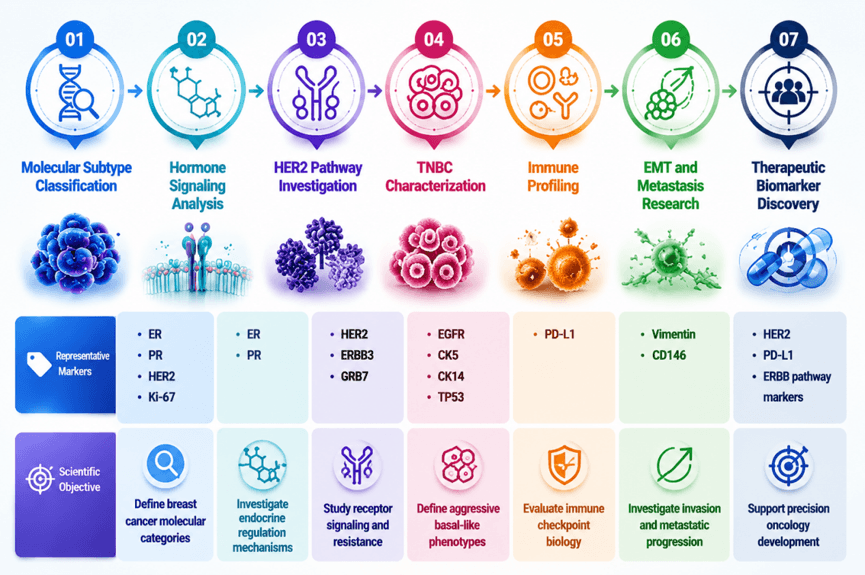
Research Frontiers Driving Breast Cancer Biomarker Discovery
Breast cancer research requires integrated approaches to understand tumor heterogeneity, therapeutic resistance, immune regulation, and biomarker-driven treatment strategies. We provide validated antibody solutions to support comprehensive breast cancer research from molecular profiling to translational discovery.
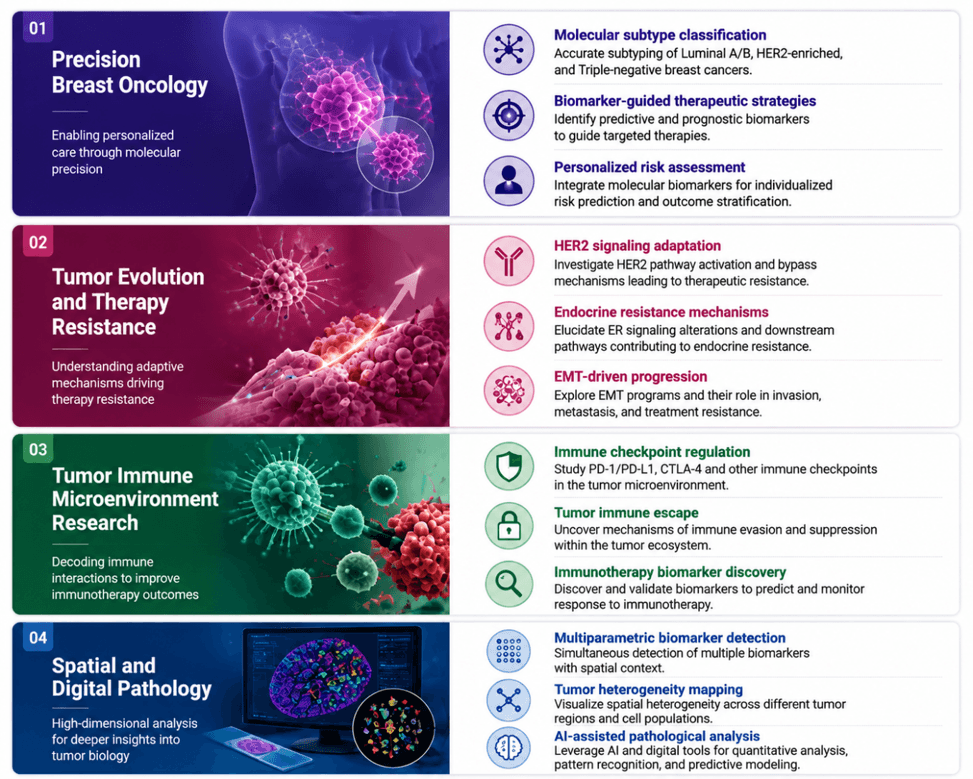
Why Researchers Choose Our Breast Cancer Biomarker Solutions?
Validated Targets. Comprehensive Panels. Precision Breast Cancer Research.
Our antibody portfolio supports the complete breast cancer research workflow—from molecular classification and pathway discovery to translational biomarker validation.
Research Challenge | Our Solution |
How can I classify breast cancer subtypes? | Integrated ER/PR/HER2/Ki-67 molecular classification panels |
How can I study HER2-driven tumor biology? | HER2, ERBB3, and GRB7 signaling pathway markers |
How can I investigate aggressive TNBC biology? | EGFR, CK5, CK14, TP53, and PD-L1 biomarker panels |
How can I analyze tumor invasion and metastasis? | EMT and cancer stemness marker solutions |
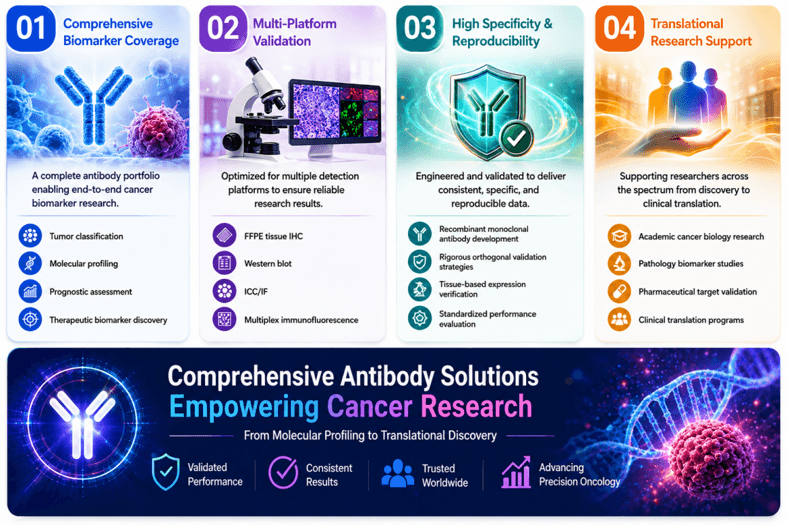
How can I improve experimental reproducibility? | Application-validated antibodies optimized for IHC, WB, IF, and multiplex analysis |
Key References
1. Harris M.A., Savas P., Virassamy B., et al. (2024).Towards targeting the breast cancer immune microenvironment. Nature Reviews Cancer. 24:554–577.
2. Lloyd M.R., Jhaveri K., Kalinsky K., Bardia A., Wander S.A., et al. (2024). Precision therapeutics and emerging strategies for HR-positive metastatic breast cancer.Nature Reviews Clinical Oncology. 21:743–761.
3. Giannoudis A., Sokol E.S., Bhogal T., et al. (2024). Breast cancer brain metastases genomic profiling identifies alterations targetable by immune-checkpoint and PARP inhibitors.NPJ Breast Cancer. 8:282.
4. Tsai J.M., Nowak R.P., Ebert B.L., et al. (2024).Targeted protein degradation: from mechanisms to clinic.Nature Reviews Molecular Cell Biology. 25:740–757.
5. Kim R., Yu J., Lim J., et al. (2026).Whole-genome landscapes of 1,364 breast cancers.Nature. 649:1282–1291.