
info@mail.ucallm.com
From Molecular Classification to Precision Pancreatic Oncology — Empowering Comprehensive Pancreatic Cancer Profiling with Validated Antibody Solutions
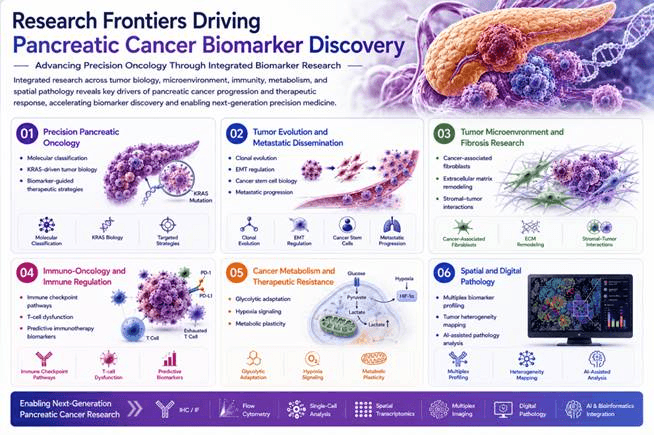
Pancreatic cancer remains one of the most aggressive and lethal malignancies worldwide, characterized by rapid progression, extensive molecular heterogeneity, early metastatic dissemination, and limited therapeutic options. Pancreatic ductal adenocarcinoma (PDAC) accounts for the majority of pancreatic malignancies and is driven by complex interactions among oncogenic mutations, tumor microenvironment remodeling, stromal desmoplasia, immune suppression, and metabolic adaptation.Despite advances in molecular profiling and targeted therapeutic strategies, challenges remain in early detection, tumor classification, prognosis prediction, and identification of effective treatment biomarkers. Key molecular regulators involved in KRAS-driven signaling, tumor suppressor pathways, epithelial–mesenchymal transition (EMT), cancer stemness, DNA damage response, immune regulation, and metabolic reprogramming provide critical insights into pancreatic tumor initiation and progression.
We support advanced pancreatic cancer biomarker research by enabling comprehensive investigation of tumor heterogeneity, molecular classification, tumor evolution, tumor–microenvironment interactions, immune regulation, metabolism, and spatial tumor biology. Validated biomarker solutions empower researchers to characterize molecular subtypes and KRAS-driven tumor biology, investigate EMT and cancer stemness, and dissect fibrosis and stromal–tumor interactions underlying tumor progression, metastasis, and therapeutic response.
Pancreatic Cancer Biomarker Antibody Portfolio
——Comprehensive Solutions for Tumor Classification, Molecular Profiling, Prognosis Evaluation and Translational Research
Accurate pancreatic cancer characterization requires integrated analysis of tumor lineage markers, oncogenic drivers, metastatic signatures, immune regulators, and pathway alterations. Our antibody portfolio covers major pancreatic cancer biomarker categories to support standardized research workflows.
Biomarker Category | Representative Markers | Research Applications | Biological Significance |
Pancreatic Lineage & Tumor Identification Markers | CK7, CK19, MUC1, MUC5AC, PDX1, CA19-9 | Tumor identification and pancreatic epithelial characterization | Define pancreatic ductal differentiation and tumor identity |
Oncogenic Driver Markers | KRAS, EGFR, HER2, MET, ALK,BRAF | Molecular alteration and signaling studies | Reveal major drivers of pancreatic tumorigenesis |
Tumor Suppressor Markers | TP53, CDKN2A, SMAD4, ARID1A | Genomic instability and tumor evolution studies | Characterize mechanisms of tumor initiation and progression |
EMT & Metastasis Markers | E-Cadherin, N-Cadherin, Vimentin, ZEB1, MMP9 | Invasion and metastatic mechanism studies | Reflect tumor plasticity and dissemination potential |
Cancer Stem Cell Markers | CD44, CD133, ALDH1A1, SOX2 | Tumor initiation and therapy resistance studies | Identify stemness-associated tumor populations |
Tumor Microenvironment & Checkpoint Markers | PD-L1, PD-1, CD8, FOXP3, CD68, Granzyme B, CD163,α-SMA, FAP, COL1A1, PDGFRβ, Fibronectin | Stromal and immune profiling | Characterize desmoplastic tumor ecosystem |
Metabolic Reprogramming Markers | GLUT1, HK2, LDHA, MCT4, FASN | Cancer metabolism studies | Investigate metabolic adaptation |
Angiogenesis & Hypoxia Markers | VEGFA, VEGFR2, HIF-1α, CD31 | Tumor vascular biology studies | Analyze angiogenic remodeling |
For Research Use Only. Not for use in diagnostic procedures
Key Pancreatic Cancer Biomarker Targets
——Molecular Functions and Research Applications
Marker | Biological Function | Research Value | Associated Pancreatic Cancer Biology |
KRAS | Small GTPase regulating MAPK signaling | Driver mutation and pathway activation studies | Pancreatic ductal adenocarcinoma |
TP53 | Tumor suppressor controlling genomic stability | Mutation-associated tumor progression studies | Advanced PDAC |
SMAD4 (DPC4) | TGF-β signaling regulator | Prognostic and metastatic studies | PDAC progression |
CDKN2A (p16) | Cell cycle checkpoint regulator | Cell cycle dysregulation studies | Pancreatic tumor evolution |
CK19 | Ductal epithelial cytokeratin marker | Pancreatic lineage characterization | Pancreatic ductal carcinoma |
MUC1 | Membrane glycoprotein involved in tumor progression | Tumor classification and metastasis research | PDAC |
CA19-9 | Tumor-associated carbohydrate antigen | Biomarker monitoring studies | Pancreatic cancer |
EGFR | Receptor tyrosine kinase activating growth signaling | Targeted pathway research | PDAC |
E-Cadherin | Epithelial adhesion protein | EMT transition studies | Tumor invasion |
Vimentin | Mesenchymal cytoskeletal marker | Metastatic mechanism analysis | Advanced pancreatic cancer |
CD44 | Cancer stemness-associated adhesion receptor | Recurrence and therapy resistance studies | PDAC |
CD133 | Stem/progenitor cell marker | Cancer stem cell research | Aggressive PDAC |
α-SMA | Activated fibroblast marker | Stromal remodeling studies | Tumor fibrosis |
FAP | Cancer-associated fibroblast marker | Tumor microenvironment studies | Desmoplastic PDAC |
PD-L1 | Immune checkpoint ligand | Immunotherapy biomarker research | Immune evasion |
CD8 | Cytotoxic T-cell marker | Immune infiltration analysis | Tumor immunity |
GLUT1 | Glucose transporter | Metabolic adaptation studies | Warburg effect in PDAC |
HIF-1α | Hypoxia-responsive transcription factor | Hypoxic tumor biology studies | Pancreatic tumor microenvironment |
Featured Pancreatic Cancer Research Panels
—Integrated Biomarker Solutions for Comprehensive Tumor Characterization
Pancreatic Ductal Adenocarcinoma (PDAC) Classification Panel—Defining Pancreatic Tumor Identity and Molecular Characteristics
Key Markers
CK7 | CK19 | MUC1 | MUC5AC | PDX1 | CA19-9 |
KRAS-Driven Signaling & Tumor Evolution Panel——Investigating Major Oncogenic Pathways in Pancreatic Cancer
Key Markers
KRAS | EGFR | p-ERK1/2 | AKT | mTOR | MYC |
Tumor Microenvironment & Fibrosis Panel——Characterizing Stromal Remodeling and Cancer–Stroma Interactions
Key Markers
α-SMA | FAP | COL1A1 | PDGFRβ | CD68 | CD8 |
Cancer Stem Cell & Resistance Panel——Investigating Tumor Initiation and Therapeutic Resistance
Key Markers
CD44 | CD133 | ALDH1A1 | SOX2 | OCT4 | Nanog |
Pancreatic Cancer Biomarker Research
——From Molecular Profiling to Translational Discovery
Research Stage | Representative Markers | Scientific Objective |
Tumor Classification | CK19, CK7, MUC1, SMAD4 | Define pancreatic tumor identity |
Molecular Alteration Analysis | KRAS, TP53, CDKN2A, SMAD4 | Study tumor evolution mechanisms |
Prognostic Evaluation | CA19-9, Ki-67, SMAD4, TP53 | Assess disease progression |
EMT & Metastasis Research | E-Cadherin, Vimentin, ZEB1, MMP9 | Investigate invasion pathways |
Cancer Stemness Analysis | CD44, CD133, ALDH1A1 | Explore recurrence and resistance |
Tumor Microenvironment Profiling | FAP, α-SMA, CD68, CD8 | Analyze stromal and immune interactions |
Therapeutic Biomarker Discovery | PD-L1, EGFR, KRAS, PI3K pathway markers | Support precision treatment research |
The Pancreatic Cancer Biomarker Research Workflow integrates molecular profiling, tumor characterization, microenvironment analysis, and therapeutic biomarker discovery to advance precision oncology research. By evaluating key markers including CK19, MUC1, KRAS, TP53, SMAD4, Ki-67, EMT-associated proteins, cancer stemness markers, and immune/stromal biomarkers, researchers can define tumor identity, investigate disease progression, and uncover mechanisms of invasion and treatment resistance. This comprehensive workflow supports the study of tumor evolution, metastasis, immune regulation, and targeted therapy opportunities, enabling reliable biomarker validation and translational discoveries in pancreatic cancer research.
Why Researchers Choose Our Pancreatic Cancer Biomarker Solutions?
Validated Targets. Comprehensive Panels. Reliable Translational Research.
Our antibody portfolio supports the complete pancreatic cancer research workflow—from tumor classification and molecular profiling to microenvironment analysis and therapeutic biomarker discovery.
Research Challenge | Our Solution |
How can I characterize pancreatic tumor identity? | Comprehensive pancreatic lineage marker panels including CK19, MUC1, MUC5AC, and SMAD4 |
How can I study pancreatic cancer progression? | Biomarkers covering KRAS signaling, EMT, invasion, and metastatic pathways |
How can I investigate tumor–stroma interactions? | Stromal and fibroblast markers including FAP, α-SMA, and extracellular matrix regulators |
How can I evaluate immunotherapy biomarkers? | Immune profiling panels including PD-L1, CD8, CD68, and FOXP3 |
How can I study therapy resistance? | Cancer stemness, metabolic, and signaling pathway biomarkers |
How can I improve experimental reproducibility? | Highly validated antibodies optimized for IHC, WB, IF, and multiplex applications |
Key References
Mizrahi J.D., Surana R., Valle J.W., Shroff R.T. (2021). Pancreatic cancer. The Lancet. 397:2008–2020.
Park W., Chawla A., O’Reilly E.M. (2021). Pancreatic cancer: a review. JAMA. 326:851–862.
Golan T., Hammel P., Reni M., et al. (2022). Maintenance olaparib for germline BRCA-mutated metastatic pancreatic cancer. New England Journal of Medicine. 377:317–327.
Ho W.J., Jaffee E.M., Zheng L. (2021). The tumour microenvironment in pancreatic cancer — clinical challenges and opportunities. Nature Reviews Clinical Oncology. 18:527–540.