
info@mail.ucallm.com
From Molecular Classification to Precision Uro-Oncology — Empowering Comprehensive Bladder Cancer Profiling with Validated Biomarker Antibody Solutions
Urothelial carcinoma (UC), the predominant form of bladder cancer, represents one of the most common malignancies of the urinary tract and is characterized by remarkable molecular heterogeneity, diverse histological phenotypes, frequent recurrence, and variable responses to therapy. Although advances in molecular classification, immune checkpoint blockade, and targeted therapy have improved patient management, challenges remain in accurate tumor stratification, recurrence prediction, treatment selection, and biomarker-guided clinical translation.
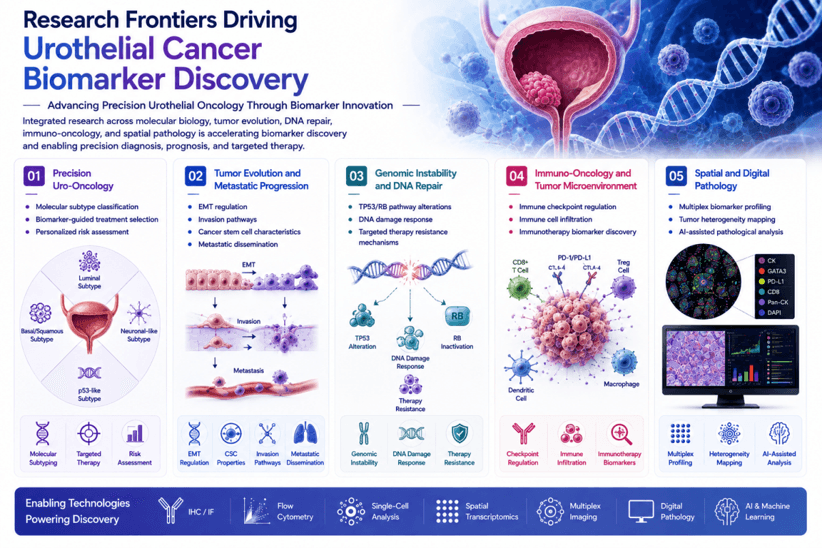
Bladder cancer progression is driven by complex molecular alterations involving urothelial differentiation programs, cell cycle regulation, DNA damage response, receptor signaling pathways, epithelial–mesenchymal transition (EMT), immune modulation, and tumor microenvironment remodeling.
We support advanced urothelial cancer biomarker research by enabling comprehensive investigation of tumor heterogeneity, molecular evolution, genomic instability, DNA repair, immune regulation, and spatial tumor biology. Validated biomarker solutions empower researchers to characterize molecular subtypes, evaluate personalized risk, investigate EMT and cancer stemness, and uncover metastatic mechanisms and DNA damage response pathways underlying tumor progression and therapeutic resistance.
Urothelial Cancer Biomarker Antibody Portfolio
——Comprehensive Solutions for Tumor Classification, Prognosis Evaluation, and Precision Oncology Research
Comprehensive bladder cancer profiling requires simultaneous evaluation of tumor lineage, molecular subtype, genomic alterations, immune status, and therapeutic targets.
Research Area | Representative Biomarkers | Applications | Scientific Significance |
Urothelial Lineage Identification | GATA3, Uroplakin II, Uroplakin III, CK7, CK20 | Confirm tumor origin and differentiation | Define urothelial identity and distinguish metastatic lesions |
Basal/Luminal Molecular Classification | Basal: CK5, CK14, p63, EGFR Luminal: GATA3, FOXA1, CK20 | Molecular subtype profiling | Reveal biological diversity and therapeutic response patterns |
Tumor Suppressor & Cell Cycle Regulation | TP53, RB1, CDKN2A, Cyclin D1, Ki-67 | Tumor progression and risk assessment | Reflect genomic instability and proliferative activity |
DNA Damage Response & Repair Pathways | ATM, ERCC1, BRCA1/2, PARP1 | Therapy sensitivity studies | Evaluate DNA repair defects and treatment vulnerabilities |
EMT & Metastatic Progression | E-cadherin, Vimentin, ZEB1, SNAIL, TWIST1, MMP2/9 | Invasion and metastasis studies | Characterize epithelial plasticity and tumor dissemination |
Immune Oncology Biomarkers | PD-L1, PD-1, CD8, CD68, CD163, FOXP3, Granzyme B | Immune profiling and immunotherapy research | Analyze immune activation and immune escape mechanisms |
Actionable Therapeutic Targets | FGFR3, HER2, EGFR, PTEN, PI3K, AKT | Target discovery and drug response studies | Identify precision treatment opportunities |
Prognostic & Invasion Markers | L1CAM, Vimentin, MMP2, MMP9, E-cadherin (loss) | Tumor invasion, recurrence, and survival analysis | Reflect tumor aggressiveness and metastatic potential |
For Research Use Only. Not for use in diagnostic procedures
Key Urothelial Cancer Biomarker Targets
——Molecular Functions, Research Applications, and Translational Value
Marker | Biological Function | Research Application | Clinical Research Relevance |
GATA3 | Master transcription factor regulating urothelial differentiation | Tumor origin identification and subtype classification | Widely used urothelial lineage biomarker |
Uroplakin II/III | Specialized urothelial membrane proteins | Confirmation of urothelial differentiation | Highly specific urothelial markers |
CK5/CK14 | Basal epithelial keratins | Basal subtype characterization | Associated with aggressive basal phenotype |
p63 | Nuclear transcription factor controlling epithelial development | Basal tumor profiling | Marker of basal/squamous differentiation |
FOXA1 | Luminal lineage transcription regulator | Molecular subtype classification | Defines luminal urothelial phenotype |
CK20 | Differentiation-associated cytokeratin | Luminal tumor characterization | Supports urothelial subtype analysis |
FGFR3 | Receptor tyrosine kinase driving proliferation signaling | Mutation and pathway studies | Major therapeutic target in UC |
HER2 (ERBB2) | Growth factor receptor promoting tumor growth | Targeted therapy research | Potential antibody-drug conjugate biomarker |
TP53 | Genome stability regulator | Mutation-associated progression studies | Common alteration in invasive disease |
RB1 | Cell cycle checkpoint regulator | Tumor evolution analysis | Associated with aggressive progression |
Ki-67 | Proliferation marker | Tumor growth assessment | Prognostic research biomarker |
PD-L1 | Immune checkpoint ligand | Immunotherapy biomarker evaluation | Immune checkpoint research |
CD8 | Cytotoxic T-cell marker | Immune infiltration profiling | Predictive immune biomarker research |
CD68/CD163 | Tumor-associated macrophage markers | Microenvironment analysis | Macrophage-mediated tumor regulation |
E-cadherin | Cell adhesion protein | EMT investigation | Loss associated with invasion |
Vimentin | Mesenchymal marker | EMT and metastasis studies | Indicator of aggressive phenotype |
MMP2/MMP9 | Extracellular matrix remodeling enzymes | Invasion mechanism studies | Metastatic progression research |
L1CAM | Cell adhesion molecule promoting migration; upregulated in aggressive tumors. | Prognostic evaluation and invasion mechanism studies. | Associated with poor prognosis and metastasis in UC |
Featured Urothelial Cancer Research Panels
——Comprehensive Biomarker Panels for Molecular Classification and Translational Discovery
n Urothelial Carcinoma Classification Panel—Defining Tumor Lineage and Molecular Identity
Key Markers
GATA3 | Uroplakin II | CK7 | CK20 | p63 | FOXA1 |
n Basal vs Luminal Molecular Subtype Panel—Decoding Bladder Cancer Molecular Heterogeneity
Key Markers
Basal Phenotype | CK5 | CK14 | EGFR | p63 |
Luminal Phenotype | GATA3 | FOXA1 | CK20 | Uroplakin III |
n Muscle-Invasive Bladder Cancer Progression Panel—Investigating Aggressive Tumor Evolution and Metastatic Potential
Key Markers
TP53 | RB1 | Ki-67 | Vimentin | E-cadherin | ZEB1 |
n Immunotherapy Biomarker Panel—Characterizing Tumor Immune Microenvironment and Checkpoint Regulation
Key Markers
PD-L1 | PD-1 | CD8 | CD68 | CD163 | CD3 |
Urothelial Cancer Biomarker Research
——From Molecular Profiling to Translational Discovery
Research Stage | Representative Markers | Scientific Objective |
Tumor Identification | GATA3, Uroplakin II/III, CK7, CK20 | Confirm urothelial tumor origin |
Molecular Classification | CK5, CK14, GATA3, FOXA1, p63 | Define basal and luminal subtypes |
Prognostic Evaluation | TP53, RB1, Ki-67, L1CAM | Assess tumor aggressiveness and outcome |
EMT & Metastasis Research | E-cadherin, Vimentin, ZEB1, MMP9 | Investigate invasion and metastatic mechanisms |
Immune Profiling | PD-L1, CD8, CD68, CD163 | Characterize tumor immune environment |
Targeted Therapy Research | FGFR3, HER2, EGFR, PTEN | Identify therapeutic vulnerabilities |
The Urothelial Cancer Biomarker Research Workflow integrates tumor identification, molecular classification, prognostic evaluation, immune profiling, and therapeutic biomarker discovery to advance precision urothelial cancer research. By analyzing key markers including GATA3, Uroplakin II/III, CK7/CK20, TP53, RB1, PD-L1, FGFR3, HER2, and EMT-associated proteins, researchers can define tumor origin, characterize molecular subtypes, evaluate disease progression, and uncover mechanisms of invasion and metastasis. This comprehensive workflow supports biomarker validation, immune microenvironment analysis, and identification of therapeutic vulnerabilities for targeted treatment development and translational oncology applications.
Why Researchers Choose Our Urothelial Cancer Biomarker Solutions?
Validated Targets. Comprehensive Panels. Reliable Translational Research.
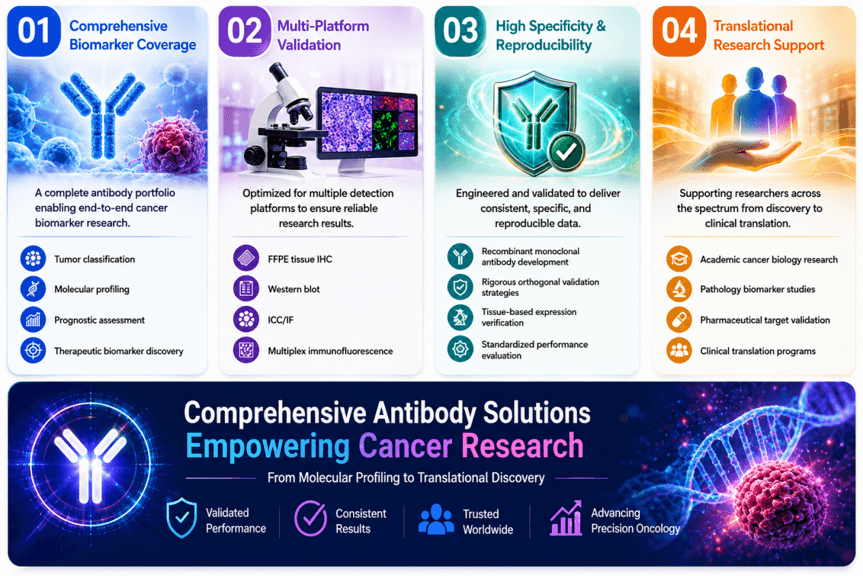
Our antibody portfolio supports the complete bladder cancer research workflow, from tumor classification and molecular profiling to therapeutic biomarker discovery.
Research Challenge | Our Solution |
How can I identify urothelial carcinoma origin? | Comprehensive lineage marker panels including GATA3, Uroplakin II/III, CK7, and CK20 |
How can I classify bladder cancer molecular subtypes? | Basal/luminal biomarker panels covering CK5, CK14, p63, FOXA1, and GATA3 |
How can I evaluate tumor aggressiveness? | Prognostic markers targeting TP53, RB1, Ki-67, EMT-associated pathways |
How can I investigate immunotherapy response? | Immune profiling antibodies targeting PD-L1, CD8, macrophage markers |
How can I identify therapeutic targets? | Biomarkers covering FGFR3, HER2, EGFR, PI3K/AKT signaling pathways |
How can I improve reproducibility? | Highly validated antibodies optimized for IHC, IF, WB, and multiplex applications |
Key References
1. Cathomas R., Lorch A., Bruins H.M., et al. (2022). The 2021 European Association of Urology guidelines on metastatic urothelial carcinoma: treatment and biomarker considerations. European Urology. 81:95–103.
2. Powles T., Valderrama B.P., Gupta S., et al. (2024). Enfortumab vedotin and pembrolizumab in untreated advanced urothelial cancer. New England Journal of Medicine. 390:875–888.
3. Roviello G., Santoni M., Sonpavde G.P., et al. (2024). The evolving treatment landscape of metastatic urothelial cancer. Nature Reviews Urology. 21:580–592.
4. Guo C.C., et al. (2024). Molecular profile of bladder cancer progression to clinically aggressive subtypes. Nature Reviews Urology. 21:391–405.
5. Coca Membribes S., Szabados B., Powles T. (2026). Towards biomarker-driven therapies for urothelial carcinoma. Nature Reviews Clinical Oncology. 23:92–106.
6. Kamat A.M., Hahn N.M., Efstathiou J.A., et al. (2022). Bladder cancer. The Lancet. 400:1756–1770.