
info@mail.ucallm.com
From Molecular Classification to Translational Oncology — Empowering Comprehensive Tumor Profiling with Validated Biomarker Antibodies
Cancer diagnosis and treatment have entered an era of molecularly guided precision oncology, where accurate biomarker detection is essential for tumor classification, prognostic evaluation, therapeutic decision-making, and mechanistic investigation.
Immunohistochemistry (IHC)-based protein biomarker profiling remains a cornerstone technology in modern pathology, providing direct insights into tumor lineage, molecular alterations, cellular signaling states, and treatment-associated phenotypes. However, the complexity and heterogeneity of solid tumors require highly specific and reproducible antibody reagents capable of supporting diverse research and translational applications.
Our Tumor Biomarker Antibody Solutions provide a comprehensive portfolio of validated monoclonal and polyclonal antibodies targeting clinically relevant cancer biomarkers across major solid tumor types, including breast, lung, colorectal, ovarian, liver, pancreatic, gastric, prostate, bladder, melanoma, and head and neck cancers.
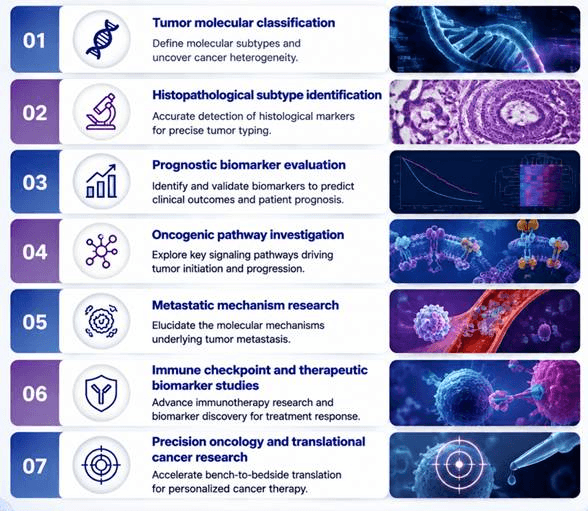
Comprehensive Tumor Biomarker Antibody Portfolio
——Integrated Solutions for Cancer Classification, Prognosis and Therapeutic Research
Accurate tumor characterization requires coordinated analysis of diagnostic markers, molecular drivers, tumor suppressors, proliferation indicators, and therapeutic response biomarkers.
Our validated antibody portfolio supports standardized biomarker profiling workflows across multiple cancer indications.
Cancer Type | Key Biomarkers | Primary Research Applications | Biological Significance |
Breast Cancer | ER (ESR1), PR (PGR), HER2 (ERBB2), Ki-67 (MKI67), p53 (TP53), MUC1, CEACAM5, CK5/6 ,GATA3 | Molecular subtype classification, endocrine therapy research | Defines hormone receptor status, HER2 signaling, and tumor aggressiveness |
Lung Cancer | EGFR, ALK, ROS1, PD-L1, Ki-67 | Driver alteration analysis and immunotherapy studies | Identifies oncogenic signaling pathways and therapeutic targets |
Colorectal Cancer | BRAF V600E, MLH1, PMS2, MSH2, MSH6 , CDX2, CK20, CK7 | Molecular classification and metastasis identification | Defines MAPK activation, MSI status, and tumor origin |
Ovarian Cancer | WT1, TP53, BRCA1/2, MUC16, HE4 | Subtype classification and DNA repair research | Supports ovarian tumor typing and therapeutic biomarker evaluation |
Hepatocellular Carcinoma | AFP, GPC3, CK19, β-catenin | Tumor differentiation and pathway analysis | Reveals hepatic lineage and malignant progression |
Pancreatic Cancer | SMAD4 (DPC4), p53, CA19-9 (sLea), MUC1, CDX2 , CK7 | Driver mutation and tumor suppressor studies | Characterizes aggressive pancreatic tumor biology |
Gastric Cancer | HER2, PD-L1, CDH1, Ki-67, p53, MMR protein | Targeted therapy and immune biomarker research | Supports molecular stratification and treatment response studies |
Prostate Cancer | PSA, AR, PTEN, ERG, Ki-67, NKX3.1, p53 | Androgen signaling and progression studies | Defines prostate cancer phenotype and therapy resistance |
Melanoma | S100, HMB45, BRAF V600E, PD-L1,SOX10 | Melanocytic identification and immunotherapy research | Supports diagnosis and targeted therapy studies |
Head & Neck Cancer | p16, EGFR, PD-L1, TP53, Ki-67 | HPV status and immune profiling | Defines molecular subtype and therapeutic opportunities |
For Research Use Only. Not for use in diagnostic procedures
Quick Reference Table of Biomarkers for 10 Common Cancers
Cancer Type | Core Biomarkers |
Breast Cancer | Diagnostic: CA15-3, CEA, ER/PR/HER2 status Favorable: ER positive, PR positive Unfavorable: HER2 overexpression, TP53 mutation, high Ki-67 |
Prostate Cancer | Diagnostic: PSA, PCA3 Favorable: Low Gleason score Unfavorable: High PSA, high Gleason score, TMPRSS2-ERG fusion |
Non-small Cell Lung Cancer | Diagnostic: CEA, CYFRA21-1 Unfavorable: EGFR mutation, KRAS mutation, TP53 mutation, high N stage |
Colorectal Cancer | Diagnostic: CEA, CA19-9, high MSI Unfavorable: KRAS/NRAS mutation, BRAF V600E mutation |
Ovarian Cancer | Diagnostic: CA-125, HE4 Unfavorable: BRCA mutation, high-grade serous carcinoma, TP53 mutation |
Hepatocellular Carcinoma (HCC) | Diagnostic: AFP, DCP Unfavorable: High AFP, vascular invasion, TP53 mutation |
Pancreatic Cancer | Diagnostic: CA19-9, CEA Unfavorable: Early tumor lesion, KRAS mutation, TP53 mutation, SMAD4 deletion |
Gastric Cancer | Diagnostic: CEA, CA72-4 Favorable: HER2 negative Unfavorable: HER2 positive, diffuse type, p53 mutation |
Melanoma | Diagnostic: S-100, LDH Unfavorable: BRAF mutation, high LDH, ulceration, NRAS mutation |
Bladder Cancer | Diagnostic: Urinary cytology, NMP22, BTA Favorable: Low grade, non-muscular invasion Unfavorable: High grade, muscular invasion, TP53 mutation |
Featured Tumor Biomarker Research Panels
——Integrated Antibody Solutions for Precision Cancer Profiling
Breast Cancer Molecular Classification Panel—Defining Hormone Receptor Status and HER2-Driven Tumor Biology
Key Markers
ER | PR | HER2 | Ki-67 | TP53 |
Lung Cancer Precision Profiling Panel—Characterizing Driver Alterations and Immune Therapeutic Targets
Key Markers
EGFR | ALK | ROS1 | PD-L1 | Ki-67 |
Colorectal Cancer Molecular Characterization Panel—Investigating Genetic Drivers and DNA Repair Defects
Key Markers
KRAS | BRAF V600E | MSH2 | MSH6 | PMS2 | CDX2 |
Ovarian Cancer Biomarker Panel—Supporting Histological Classification and Therapeutic Stratification
Key Markers
WT1 | TP53 | PAX8 | p53 | MUC16 | Ki-67 |
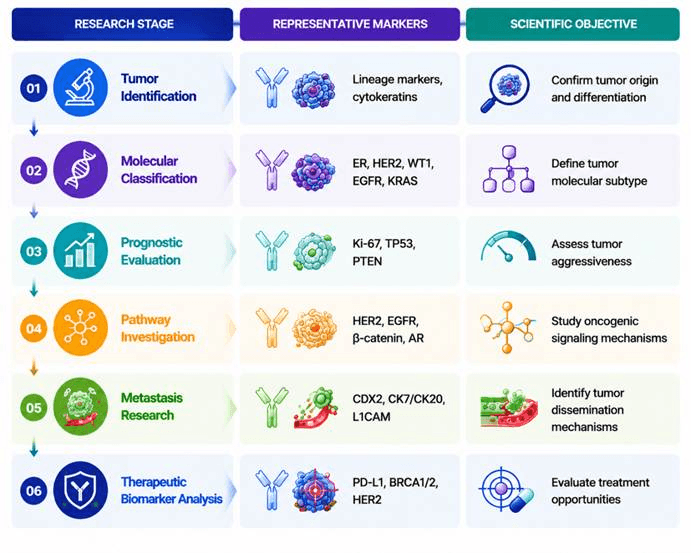
Tumor Biomarker Research
——From Molecular Profiling to Translational Discovery
The tumor biomarker research workflow integrates tumor identification, molecular classification, prognostic assessment, signaling pathway analysis, metastasis investigation, and therapeutic biomarker evaluation to comprehensively characterize tumor biology and therapeutic potential. Through validated antibody-based detection platforms, researchers can profile key biomarkers, define molecular subtypes, uncover oncogenic mechanisms, assess disease progression, and identify actionable targets, ultimately accelerating precision oncology discovery and translational cancer research.
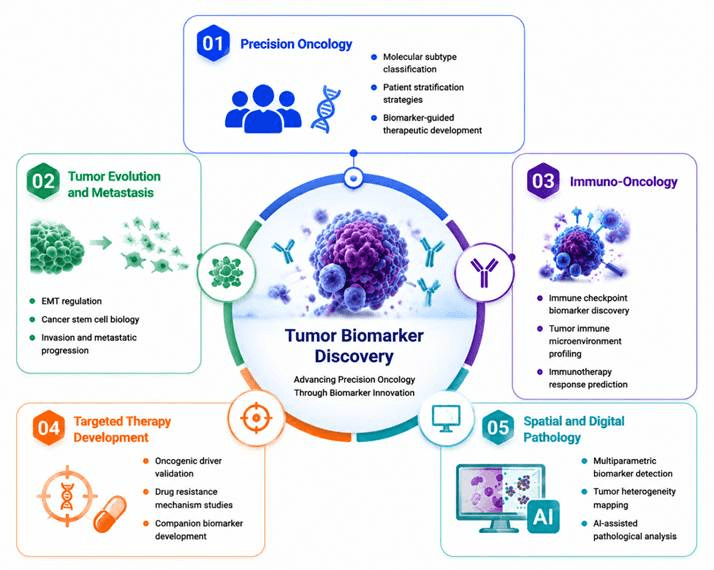
Research Frontiers Driving Tumor Biomarker Discovery
Precision oncology integrates molecular classification, biomarker-guided patient stratification, and targeted therapeutic development to advance personalized cancer treatment. By investigating tumor evolution, metastatic mechanisms, immune microenvironment interactions, drug resistance pathways, and spatial tumor heterogeneity, researchers can identify actionable biomarkers, optimize therapeutic strategies, and accelerate translational discoveries through advanced antibody-based profiling and digital pathology technologies.
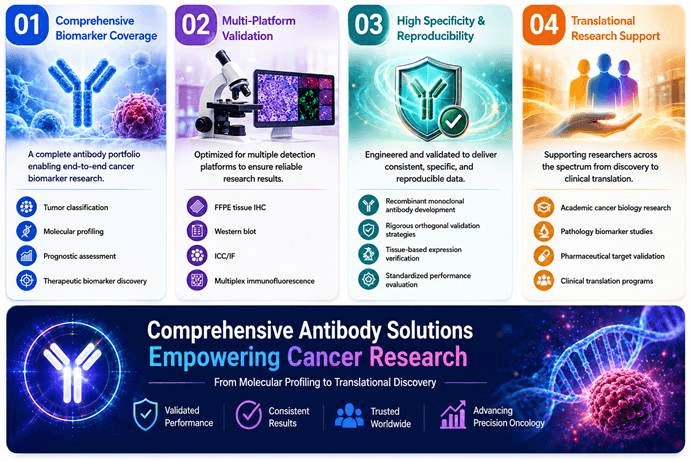
Why Researchers Choose Our Tumor Biomarker Solutions?
Validated Targets. Comprehensive Coverage. Reliable Translational Research.
Our antibody solutions support the complete cancer biomarker research workflow—from molecular characterization and pathway discovery to translational oncology applications.
Research Challenge | Our Solutions |
How can I accurately classify tumor subtypes? | Comprehensive biomarker panels covering lineage, molecular drivers, and subtype markers |
How can I investigate tumor progression mechanisms? | Validated antibodies targeting oncogenic pathways, proliferation markers, and tumor suppressors |
How can I evaluate therapeutic biomarkers? | Detection solutions for HER2, PD-L1, BRCA, EGFR, and immune-related targets |
How can I distinguish primary and metastatic tumors? | Integrated cytokeratin and lineage marker panels |
How can I improve experimental reproducibility? | Application-validated antibodies optimized for IHC, WB, ICC/IF, and multiplex assays |
Key References
Tang X., Berger M.F., Solit D.B. (2024).Precision oncology: current and future platforms for treatment selection.Trends in Cancer. 10(9):781–791.
Zhou Y., Tao L., Qiu J., et al. (2024).Tumor biomarkers for diagnosis, prognosis and targeted therapy.Signal Transduction and Targeted Therapy.9:132.
Passaro A., Al Bakir M., Hamilton E.G., et al. (2024).Cancer biomarkers: Emerging trends and clinical implications for personalized treatment.Cell.187(7):1617–1635.
Kushnarev V., Stupichev D., Davitavyan S., et al. (2025).RNA sequencing and immunohistochemistry jointly improve tumor biomarker interpretation.Scientific Reports.15:28264.
AlDoughaim M., AlSuhebany N., AlZahrani M., et al. (2024).Cancer Biomarkers and Precision Oncology: A Review of Recent Trends and Innovations.Clinical Medicine Insights: Oncology.18:11795549241298541.