
Available Topics
Explore curated workflow pages with resources, guidance, and related reagent products.
 Application Solutions
Epithelial Stem Cells Derived from Pluripotent Stem Cells
Epithelial tissues are essential barrier and functional tissues in the human body, widely distributed in the skin, cornea, hair follicles, and the surfaces of various organs.
 Application Solutions
Benzoylation
Lysine benzoylation (Kbz) is a reversible aromatic lysine acylation modification.
Application Solutions2-Hydroxyisobutyrylation
Lysine 2-hydroxyisobutyrylation (Khib) is a widespread lysine acylation modification conserved across prokaryotic and eukaryotic organisms.
 Application Solutions
S-Acylation (Commonly referred as S-palmitoylation)
Protein S-acylation is a reversible lipid modification involving the attachment of fatty acyl groups to cysteine residues through thioester bonds, with S-palmitoylation being its predominant form.
 Application Solutions
Phosphorylation
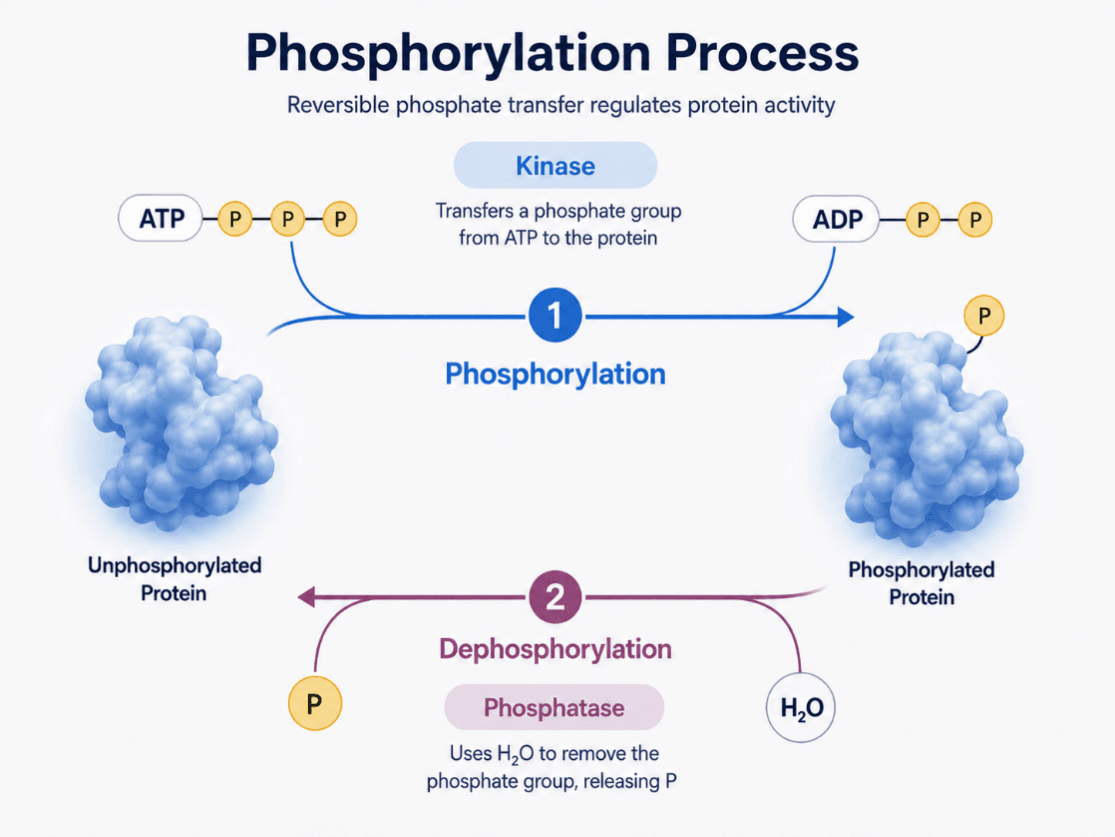
Protein phosphorylation is one of the most abundant and extensively studied post-translational modifications (PTMs).
 Application Solutions
Acetylation
Protein acetylation is a common post-translational modification (PTM) characterized by the addition of acetyl groups to lysine residues or protein N-termini.
 Application Solutions
Glycosylation
Major forms of protein glycosylation include N-linked glycosylation and O-linked glycosylation, which differ in their attachment sites and biological functions.
Application SolutionsSUMOylation
SUMOylation is a reversible post-translational modification that regulates protein function through the covalent attachment of small ubiquitin-like modifier (SUMO) proteins to specific lysine residues in proteins.
 Application Solutions
Ubiquitination
Ubiquitination is a dynamic protein modification that determines the fate and function of target proteins through the covalent attachment of ubiquitin molecules.
 Online Message